Wide & Fine Tooth Comb for Natural Hair, Wigs & Extensions
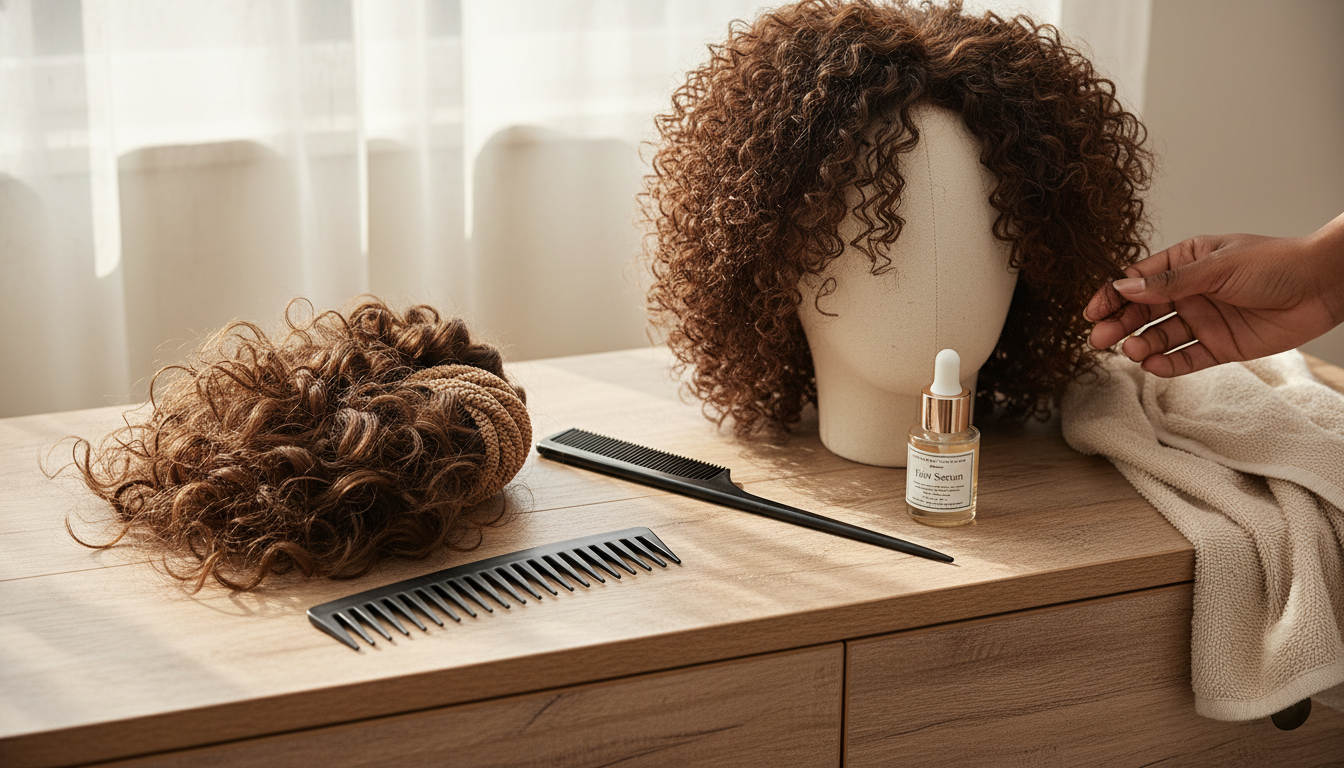
Professional Wide & Fine Tooth Comb for Natural Hair and Wigs: Detangle, Define, and Smooth
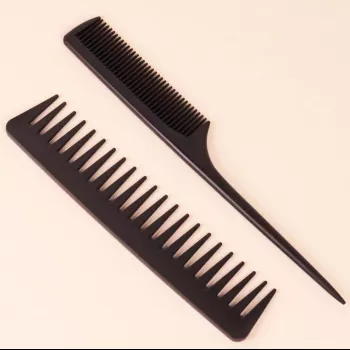
A single comb can do two jobs: gently detangle with wide teeth, then refine and smooth with fine teeth. This dual-tooth design helps reduce snagging on natural textures and supports neat finishes on wigs, extensions, and protective styles—without needing to switch tools mid-routine.
Why a dual-tooth comb earns a spot in a hair kit
A dual-tooth comb is a simple upgrade that makes daily styling more predictable—especially when hair texture, density, or added hair (like wigs and clip-ins) makes tangles more likely. Instead of bouncing between tools, you can move from detangling to finishing in one flow.
- Wide teeth help release knots and shed hair with less pulling—useful for coily, curly, and thick textures.
- Fine teeth help refine parts, smooth sections, and distribute product more evenly.
- Switching between sides supports a step-by-step routine: detangle first, then shape and polish.
- A comb is easy to sanitize and travel with compared to larger detangling tools.
Gentle handling matters, since hair shedding and breakage can be influenced by many factors (including styling habits and hair health). For background reading, see the American Academy of Dermatology Association on hair loss causes (AAD) and Cleveland Clinic’s overview of hair breakage prevention (Cleveland Clinic).
Best uses for natural hair
Natural textures often benefit from fewer passes and more “slip.” The wide-tooth side does the heavy lifting, while the fine-tooth side is best saved for precision moments.
- Detangling on damp hair: apply conditioner or a detangling spray, start at ends, and work upward with the wide-tooth side.
- Defining curls and coils: gently separate clumps with wide teeth, then use fine teeth sparingly to refine edges or roots.
- Creating clean parts for twists, braids, and updos: use the fine-tooth side for sharper lines.
- Refreshing day-two hair: lightly lift at the roots with wide teeth to avoid frizz.
Best uses for wigs and extensions
Added hair looks best when it’s detangled with low tension and supported near attachment points. A dual-tooth comb helps you detangle first, then do a light finishing pass for a polished look.
- Wig detangling: support the hair close to the base/cap to reduce tension on knots and seams.
- Synthetic fibers: use slow, short strokes with the wide-tooth side to help prevent stretching and snap-back frizz.
- Human-hair wigs: finish with the fine-tooth side for smoother ends and a more polished look.
- Clip-ins and ponytails: detangle before installing, then lightly smooth after placement.
Wide vs. fine teeth: when to use each side
The easiest way to reduce breakage is to match the tool to the task. Wide teeth are for releasing tangles and protecting curl groupings; fine teeth are for controlled shaping and sleek finishes.
- Wide teeth: detangling, minimizing snagging, working through thicker sections, reducing stress on curls.
- Fine teeth: smoothing, sectioning, blending, distributing stylers, refining short flyaways.
- Avoid over-combing: repeated passes with fine teeth can increase frizz or disrupt curl patterns.
- Match the side to the moment: detangle first, then switch to refine only where needed.
Quick guide: choose the right side for the task
| Task | Recommended side | Tip to reduce breakage |
|---|---|---|
| Remove knots after wash day | Wide-tooth | Work in sections; start at the ends and move upward |
| Distribute conditioner or leave-in | Wide-tooth | Add water slip if the comb drags |
| Create a clean middle/side part | Fine-tooth | Part gently at the scalp; avoid repeated scraping |
| Smooth a ponytail or bun | Fine-tooth | Use light pressure; rely on product for hold, not force |
| Detangle a wig or extensions | Wide-tooth | Hold hair near the base to reduce tension on the cap/wefts |
| Polish ends for a neat finish | Fine-tooth | One or two passes maximum to avoid frizz |
How to use it for less snagging and less shedding
Small technique changes can make a noticeable difference—especially for fragile edges, dense hair, or wigs with delicate lace and knots.
- Prep with slip: conditioner, leave-in, or detangling spray helps the comb glide.
- Section first: smaller sections mean less force and fewer snapped strands.
- Use the wide-tooth side to detangle: switch to fine teeth only after knots are gone.
- Keep tension low: hold hair near the roots or the wig base to reduce pulling.
- Move slowly around fragile areas: nape, edges, and lace/front hairlines.
If the comb stalls, don’t push through—add more slip, reduce section size, and restart at the ends. That “reset” is often the difference between smooth detangling and unnecessary breakage.
Care and cleaning for long-lasting performance
Product spotlight: Professional Wide & Fine Tooth Comb for Natural Hair and Wigs
If you want one tool that supports both detangling and finishing, the Professional Wide & Fine Tooth Comb for Natural Hair and Wigs is a practical pick for wash day, protective styling, and wig maintenance.
More in-stock picks
- Carbon Fiber–Style Steering Wheel Cover with Honeycomb Anti-Slip Grip
- 80 PSI Portable Bike Pump with Dual Valve & Tool Kit
FAQ
Is a wide-tooth comb better than a brush for natural hair?
Wide teeth can reduce snagging and help preserve curl patterns, especially on damp hair with conditioner or leave-in for slip. Some detangling brushes work well too, but sectioning and gentle technique usually matter more than the tool type.
Can this comb be used on synthetic wigs without ruining the fibers?
Yes, with care—use the wide-tooth side, work in short gentle strokes, and detangle from ends upward. Support the hair near the cap and avoid tugging around the hairline to reduce stress on fibers and construction.
How do you clean a comb after using heavy stylers or oils?
Remove shed hair first, then soak the comb in warm soapy water and scrub between the teeth with a small brush. Rinse well, optionally wipe with isopropyl alcohol for sanitizing, and air-dry completely before storing.















Leave a comment