48-Inch Retro Carved Sideboard: Drawers & Doors Storage
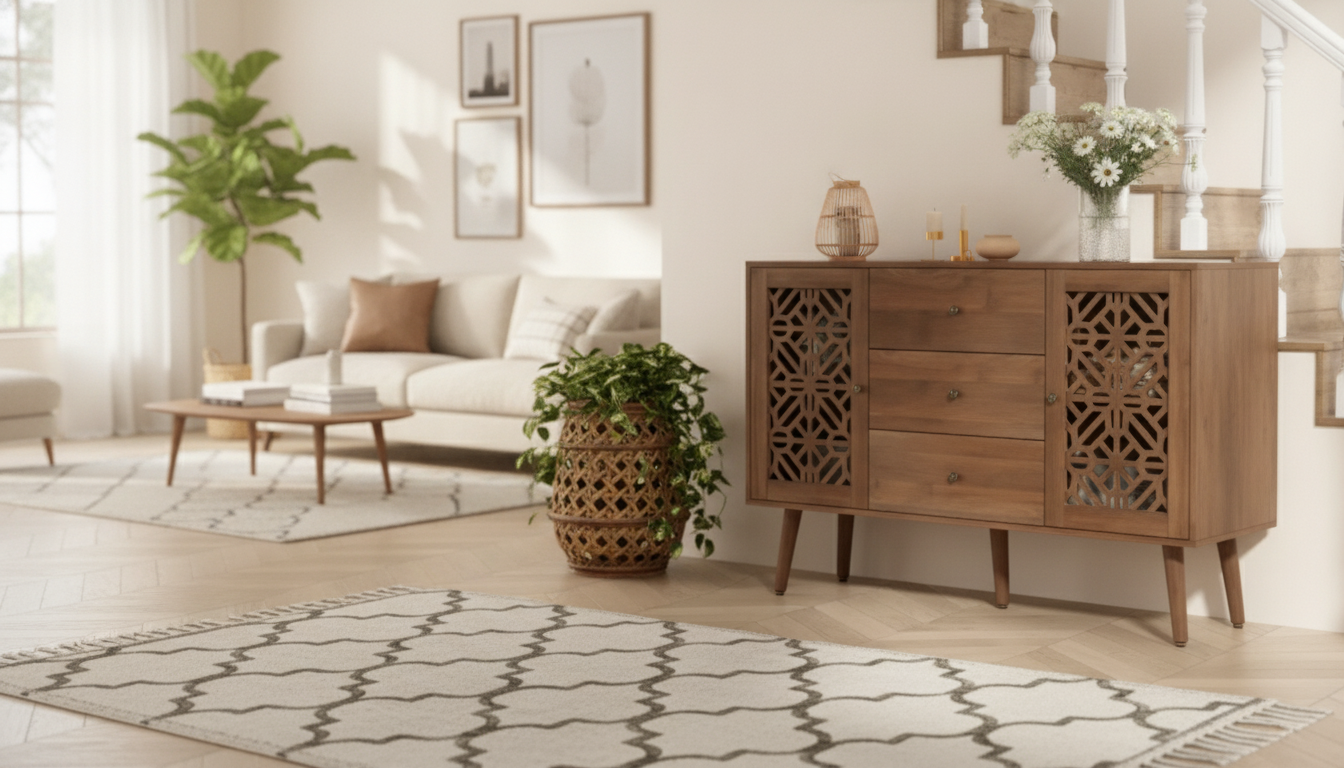
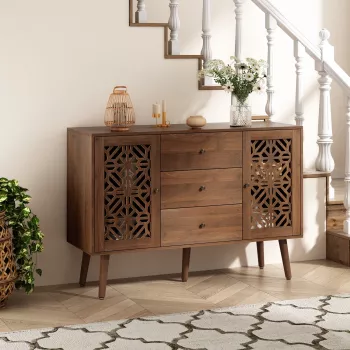
48″ Retro Hollow Carved Sideboard Buffet Cabinet with Drawers and Doors
A 48-inch sideboard can solve everyday storage and styling needs in one piece—tucking away dining essentials, creating a coffee or bar station, or adding a statement console to an entryway. This retro hollow carved design pairs decorative door fronts with practical drawers and enclosed cabinets, making it easy to keep clutter out of sight while elevating the room’s texture and character.
What Makes This Sideboard Stand Out
- A compact 48-inch footprint that suits apartments and smaller dining rooms while still delivering true buffet-style storage.
- Retro hollow carved door detailing that adds depth and shadow play, helping the piece hold its own as a focal point even without wall art.
- Drawer-and-door storage that supports both quick-grab items (napkins, cutlery) and bulkier categories (serveware, small appliances).
- Flexible placement as a dining room buffet, living room console, entryway cabinet, or home office credenza.
Size, Layout, and Everyday Storage
A 48-inch cabinet is often the “just right” choice: large enough to be useful, small enough to avoid crowding a walkway. The simplest way to make it work hard is to assign zones from day one. Reserve drawers for flat or small items (bar tools, tea packets, placemats) and keep cabinets for taller items and categories that look messy on open shelving.
The top surface can become a daily-use landing zone. Popular setups include a coffee station with mugs and pods in the drawers, a bar station with bottles behind doors, or a display surface with a lamp and a tray to corral odds and ends. If you plan to place an appliance on top (like a microwave), confirm weight limits and allow ventilation space around the unit so heat can dissipate safely.
If electronics are involved—speakers, a record player, or a small printer—use a simple cable plan. Route cords along the back edge, then secure them with adhesive clips so they don’t snag when doors open. Finally, think about traffic flow: leave enough clearance in front for drawers to extend and doors to swing without hitting dining chairs, a rug edge, or a hallway path.
Room-by-Room Setup Ideas
| Placement | What to Store | Top Surface Ideas | Helpful Add-Ons |
|---|---|---|---|
| Dining room buffet | Plates, serving bowls, table linens | Centerpiece tray, candle holders | Drawer organizers, shelf risers |
| Entryway console | Keys, mail, scarves, small bags | Mirror, catchall bowl, lamp | Felt liners, labeled bins |
| Living room credenza | Games, throws, media accessories | Art books, speaker, plants | Cable clips, anti-tip strap |
| Kitchen overflow | Pantry extras, small appliances | Coffee station, toaster zone | Heat-safe mat, baskets |
Retro Hollow Carved Style: How to Coordinate It
Carved details bring built-in texture, so the styling goal is balance rather than “more.” Warm neutrals, muted greens, and earth tones naturally complement carved surfaces. For a sharper retro vibe, lean into contrast: black-and-white accents, geometric ceramics, or a bold lamp shape will make the carved pattern feel intentional instead of ornate.
Material mixing matters. Pair detailed doors with simpler supporting pieces—plain dining chairs, minimal hardware on nearby furniture, and clean-lined lighting. On the wall, a single large mirror or one centered framed artwork keeps the space calm. If the carving is highly detailed, skip a busy gallery cluster that competes for attention.
For finishing touches, echo the texture without copying it. A linen runner, matte ceramic vase, or woven basket on the lower shelf area can reinforce the handmade feel while keeping the overall look edited and livable.
Using Drawers and Doors for Better Organization
Care, Cleaning, and Long-Term Maintenance
Carved surfaces look best when dust doesn’t settle into the detail. Use a soft microfiber cloth for routine dusting, then switch to a soft brush attachment for crevices so you can lift debris without snagging. For general cleaning guidance on hard surfaces, consult the American Cleaning Institute.
Placement and Safety Tips
Leave breathing room behind the cabinet for baseboards and airflow—especially if it sits near heat sources. If you’re using the top for appliances or candles, keep clearances sensible and follow basic home fire safety practices recommended by the National Fire Protection Association. Finish with floor protection: felt pads help prevent scratches, and for tile or uneven surfaces, adjustable pads or a thin protective mat can reduce wobble.
Product Options Available Now
- 48″ Retro Hollow Carved Sideboard Buffet Cabinet with Drawers and Doors — a compact statement piece designed for hidden storage and an elevated, retro-inspired look.
- Scandinavian Modern Luxury TV Stand — a streamlined alternative for media-focused rooms that still benefit from closed storage and a clean, modern profile.
FAQ
How much clearance is needed to open the drawers and doors comfortably?
Plan for enough space for full drawer extension and door swing without hitting dining chairs, a hallway path, or a rug edge. If the cabinet sits opposite seating, test the clearance by pulling a chair out to its usual spot and confirming everything still opens smoothly.
How should carved cabinet doors be cleaned without damaging the detail?
Dust with a microfiber cloth, then use a soft brush (or a vacuum brush attachment) to lift dust from the grooves. If needed, wipe gently with a mild cleaner, avoid abrasive tools, and dry the surface right away to keep moisture from settling in the carved areas.
Can this work as a coffee station or bar cabinet?
Yes—use drawers for mugs, spoons, napkins, and pods or bar tools, and store bottles or larger items behind the doors to keep the setup looking neat. A tray on top helps contain daily-use items, and simple cable clips keep cords managed if you add a small appliance.











Leave a comment