Tidy Cat Corner: Modern Litter Enclosure with Storage
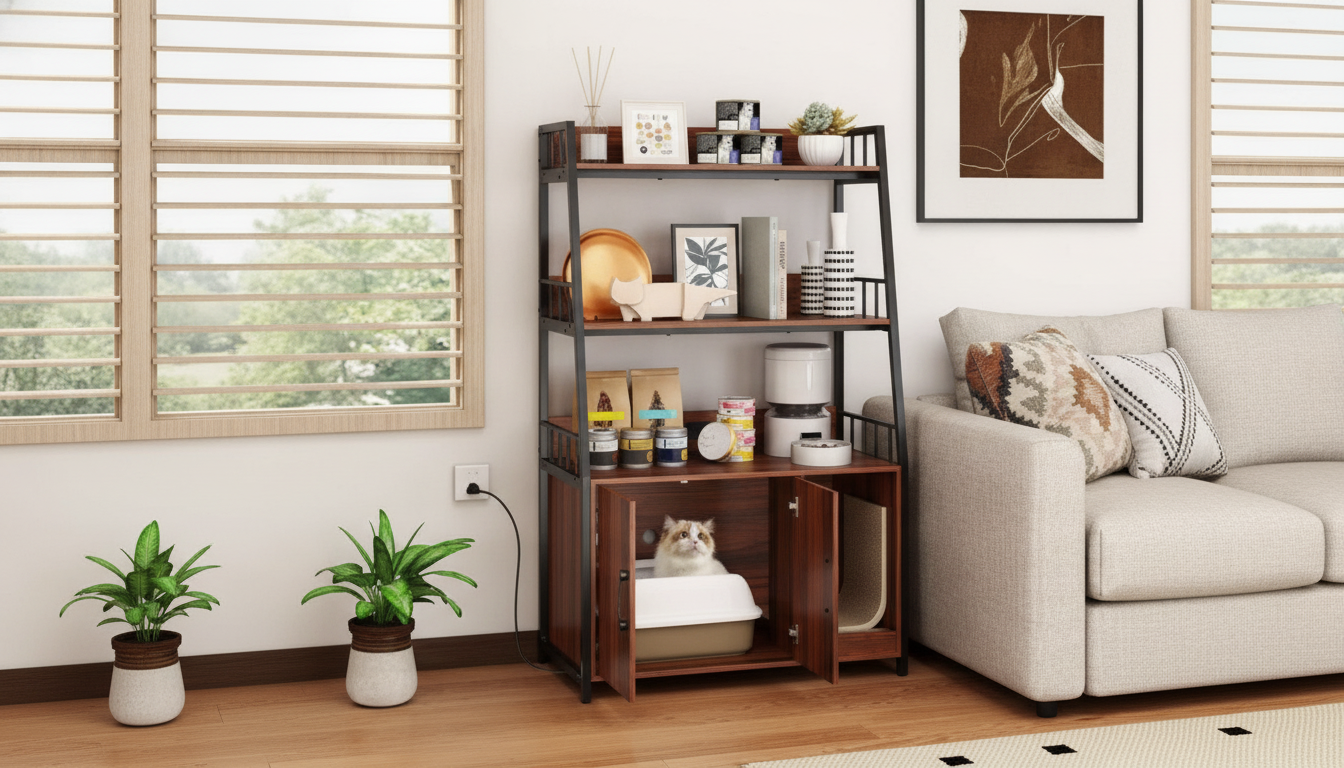
A modern way to keep the litter box tidy (and your room looking put-together)
A litter box setup can look neat, cut down on tracked granules, and still stay easy for daily scooping—without turning a living space into a utility corner. The Modern Cat Litter Box Enclosure with Storage Shelves, Scratching Pad & Charging Station combines a hidden litter area with practical shelving, a built-in scratching surface, and a charging spot so small essentials stay in one place instead of migrating across counters and nightstands.
What this enclosure adds to a litter box setup
- Creates a dedicated, enclosed space that visually hides the litter pan.
- Adds storage shelves for litter supplies, bags, deodorizer, and grooming tools.
- Includes a scratching pad to redirect clawing away from furniture.
- Charging station keeps a phone or small devices off counters and away from litter dust.
- Helps define a “cat zone” that can blend into living rooms, hallways, or bedrooms.
That combination matters because cats thrive on predictable routines. When their essentials live in one consistent, low-clutter spot, it’s easier to keep a steady cleaning schedule—and easier for guests to forget there’s even a litter box nearby.
Design details that matter day to day
- Entry placement: It affects privacy and traffic flow; choose a spot that keeps the doorway clear so your cat doesn’t feel ambushed while entering or exiting.
- Interior clearance: Make sure there’s room for the litter box to slide out smoothly for cleaning rather than needing to tilt, twist, or scrape the sides.
- Easy-wipe surfaces: A flatter surface around the entrance makes it simpler to wipe away dust and stray granules before they spread.
- Shelf strategy: Shelves work best when frequently used items (scoop, bags, wipes) are at hand level and backup supplies are stored higher.
- Scratching pad placement: A pad near the entrance encourages cats to pause and scratch before roaming the room—helpful if scratching usually happens on nearby chair legs or rugs.
Before ordering, measure the litter box you already own (or plan to buy), including any high sides, rims, or attached steps. That extra half-inch of plastic can be the difference between a box that slides out easily and one that always catches.
Placement, odor control, and airflow
- Leave a little breathing room from walls so air can circulate and humidity doesn’t build up.
- Avoid placing the enclosure next to loud appliances; some cats avoid boxes in noisy areas.
- Use a litter mat at the exit to reduce tracking, especially with fine-grain litters.
- Pair with unscented clumping litter and consistent scooping to reduce odor at the source.
- If using deodorizing products, avoid overpowering fragrances that may deter sensitive cats.
An enclosure can make the area look cleaner, but odor control still comes from fundamentals: frequent scooping, the right litter, and regular box washing. For deeper guidance on preventing litter box issues, reference advice from the American Veterinary Medical Association (AVMA) and International Cat Care, including tips on box management and cat-friendly routines.
Charging station safety around pets
- Route cords so they do not dangle near the entrance where cats may chew or paw.
- Use a short cable or cord clip to keep slack off the floor and away from litter dust.
- Keep charging devices on the shelf surface, not on top edges where they can be knocked down.
- Avoid charging power banks or devices that get hot in enclosed pockets; allow ventilation.
- Wipe dust regularly so charging ports and adapters stay clean.
Quick feature checklist
Checklist for a practical, tidy litter enclosure setup
| Feature | Why it helps | What to check before setup |
|---|---|---|
| Hidden litter compartment | Reduces visual clutter and helps contain scatter | Interior dimensions fit the litter box with room to lift/slide it out |
| Storage shelves | Keeps supplies together and off floors | Shelf height supports containers; items won’t tip when the cat bumps the unit |
| Scratching pad | Redirects scratching to an approved surface | Pad is positioned where the cat naturally pauses or turns |
| Charging station | Convenient spot for small devices | Cord routing stays out of reach; outlet access is safe and not overloaded |
| Easy-clean surfaces | Speeds up wipe-downs and reduces odor buildup | Edges and corners are reachable; mat fits at the entrance |
Cleaning routine that keeps it fresh
For cats that suddenly stop using the box, medical or behavioral factors can be involved. The ASPCA’s litter box guidance is a helpful starting point for common causes and next steps.
Recommended add-ons from the same shop
- Comfort nearby: A cozy resting spot placed a short distance away can support a relaxed routine after scratching and play. Consider the Luxury Plush Pet Cradle Bed: Deluxe Fleece & Velvet Sofa for Dogs & Cats as a soft lounge option.
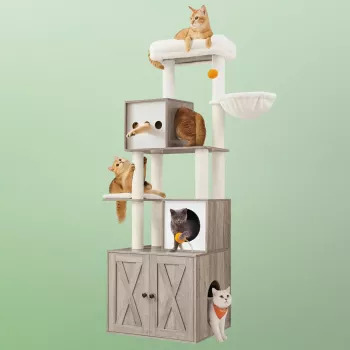
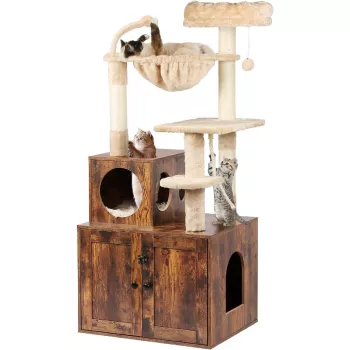
- Activity elsewhere: Adding a dedicated climbing and scratching option in another room helps distribute scratching away from the litter area. The Deluxe Cat Climbing Tree & Claw Sharpener can create a separate play zone so the litter enclosure stays more strictly “business.”
FAQ
Will a litter box enclosure reduce odor?
It can help contain scattered litter and visually hide the box, but odor control still depends on daily scooping, the right litter, and regular box washing. Allow airflow around the unit so moisture doesn’t get trapped.
How can cords be kept safe with a charging station near a cat area?
Use cord clips or sleeves, keep cables short and elevated, avoid dangling loops, and place chargers on a stable shelf surface. Check cords regularly for chewing and replace any damaged cables right away.
What size litter box fits best inside an enclosure like this?
Measure the litter box’s full outer dimensions (including high sides and any rim) and ensure the enclosure has extra clearance to slide the box out and lift it for dumping and washing. A little extra space makes daily maintenance much easier.













Leave a comment