Antique Brass Wall-Mounted Rainfall Shower + Tub Set

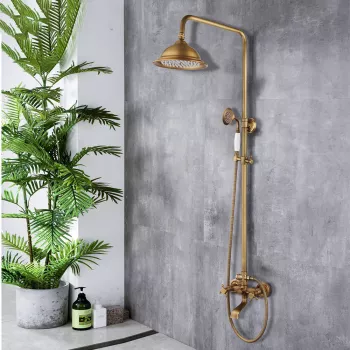
Antique Brass Wall Mounted Rainfall Shower and Bathtub Faucet Set
A wall-mounted rainfall shower paired with a bathtub spout can transform a bathroom into a more open, spa-like space—especially in an antique brass finish that complements vintage, transitional, and modern-classic interiors. This guide covers what to expect from an antique brass wall-mounted set, how to plan installation, what features matter day to day, and how to keep the finish looking its best.
Why wall-mounted plumbing changes the look and feel of a bath
Moving the shower and tub hardware to the wall is one of those upgrades that can make a bathroom feel more intentional—even without changing the tub itself.
- Creates a cleaner visual line around the tub and shower area by moving controls and outlets to the wall.
- Can make cleaning easier around the tub deck or ledges since fewer components sit on horizontal surfaces.
- Works well for freestanding tubs positioned near a wall, alcove tubs, and many tub-shower conversions.
- Supports a more tailored layout when existing floor-mounted plumbing is not desired.
What’s typically included in a rainfall shower and tub faucet set
Most wall-mounted sets are designed to look unified—matching shapes, finish tone, and trim details—so the tub area and shower zone feel like a single suite.
- Rainfall shower head designed for a wider, overhead water pattern.
- Tub spout (often with a diverter or paired with a separate diverter depending on the design).
- Wall-mounted controls/handles for temperature and flow management.
- Mounting hardware and trim components; valve/rough-in requirements vary by set.
If you’re aiming for a calmer, less cluttered look, it’s worth confirming whether the valve is included or if a specific rough-in valve is required so you can plan parts and labor accurately.
Finish and style: getting antique brass right
Antique brass is popular because it reads warm and lived-in without looking flashy. It can bridge older architectural elements and newer tile choices in a way that feels natural.
- Antique brass tends to read warmer and more muted than polished brass, helping it pair with natural stone, off-white tile, and darker woods.
- Pairs especially well with classic details like framed mirrors, fluted vanities, or traditional sconce lighting.
- Mixing metals can still work: antique brass often combines nicely with matte black accents or brushed nickel when repeated intentionally.
- Check whether the finish is living/patinating or sealed; sealed finishes aim for a more consistent look over time.
To keep the overall palette cohesive, repeat the brass tone in one or two supporting pieces—like a towel bar or cabinet pulls—rather than trying to match every accessory exactly.
Key measurements and compatibility checks before ordering
Because wall-mounted fixtures depend on what’s behind the finished surface, a few measurements and construction details make the difference between a smooth install and a frustrating retrofit.
- Confirm wall construction depth and whether the plumbing can be routed inside the wall (especially in exterior walls).
- Verify tub spout reach so water clears the tub’s inner edge without splashing the deck or wall.
- Plan shower head height and projection to avoid spraying outside the wet zone, especially in smaller baths.
- Ensure the valve/rough-in (if required) matches the set specifications and local plumbing code expectations.
- If replacing an existing setup, note current pipe locations and whether patching or tile work will be needed.
Pre-installation checklist (quick reference)
| Item to confirm | Why it matters | How to verify |
|---|---|---|
| Tub spout reach | Prevents splash and ensures water lands inside the tub | Measure from finished wall to desired water drop point inside tub |
| Shower head height | Improves comfort and reduces overspray | Measure from finished floor to preferred head height |
| Valve/rough-in requirements | Avoids mismatched parts and rework | Check product specs and match to existing or planned valve |
| Water pressure and flow expectations | Affects rainfall experience and rinse performance | Confirm household pressure; consider regulator or plumber assessment |
| Wall material and access | Determines installation complexity | Identify stud/bearing walls, tile removal scope, and access panel options |
For households focused on efficiency, it’s also helpful to understand showerhead flow limits and labeling. The EPA’s WaterSense program explains how certified showerheads can reduce water use while maintaining performance (EPA WaterSense: Showerheads).
Everyday performance: rainfall comfort, control feel, and switching modes
Quality plumbing fittings are often evaluated against established performance and safety requirements. If you like to review the technical side, ASME provides an overview for plumbing supply fitting standards (ASME A112.18.1 / CSA B125.1 overview).
Installation notes to plan for (and when to call a pro)
Care and maintenance for an antique brass finish
Product spotlight: Antique Brass Wall Mounted Rainfall Shower and Bathtub Faucet Set
If you want a coordinated, wall-mounted look in a warm metallic tone, the Antique Brass Wall Mounted Rainfall Shower and Bathtub Faucet Set brings the rainfall shower and tub spout together in a single matching package.
More in-stock picks
FAQ
Does a rainfall shower head need high water pressure?
Rainfall shower heads often feel gentler because the water is spread over a wider area, even when flow is normal. Adequate household pressure helps overall performance, and reduced output can sometimes be caused by flow restrictions or mineral buildup.
Can a wall-mounted shower and tub set be installed on an existing bathtub setup?
Sometimes, but it depends on where the current supply lines and valve are located and whether the wall can be opened for new routing and waterproofing. A professional evaluation helps confirm feasibility, code compliance, and the amount of tile or drywall work required.
How should antique brass fixtures be cleaned without damaging the finish?
Use mild soap and water, then dry with a soft cloth to minimize spotting. Avoid abrasive pads and harsh cleaners, and in hard-water areas, wipe down regularly and descale gently when flow starts to drop.














Leave a comment