Kitchen Island vs Table: When It Counts as One
Is a kitchen island a table?
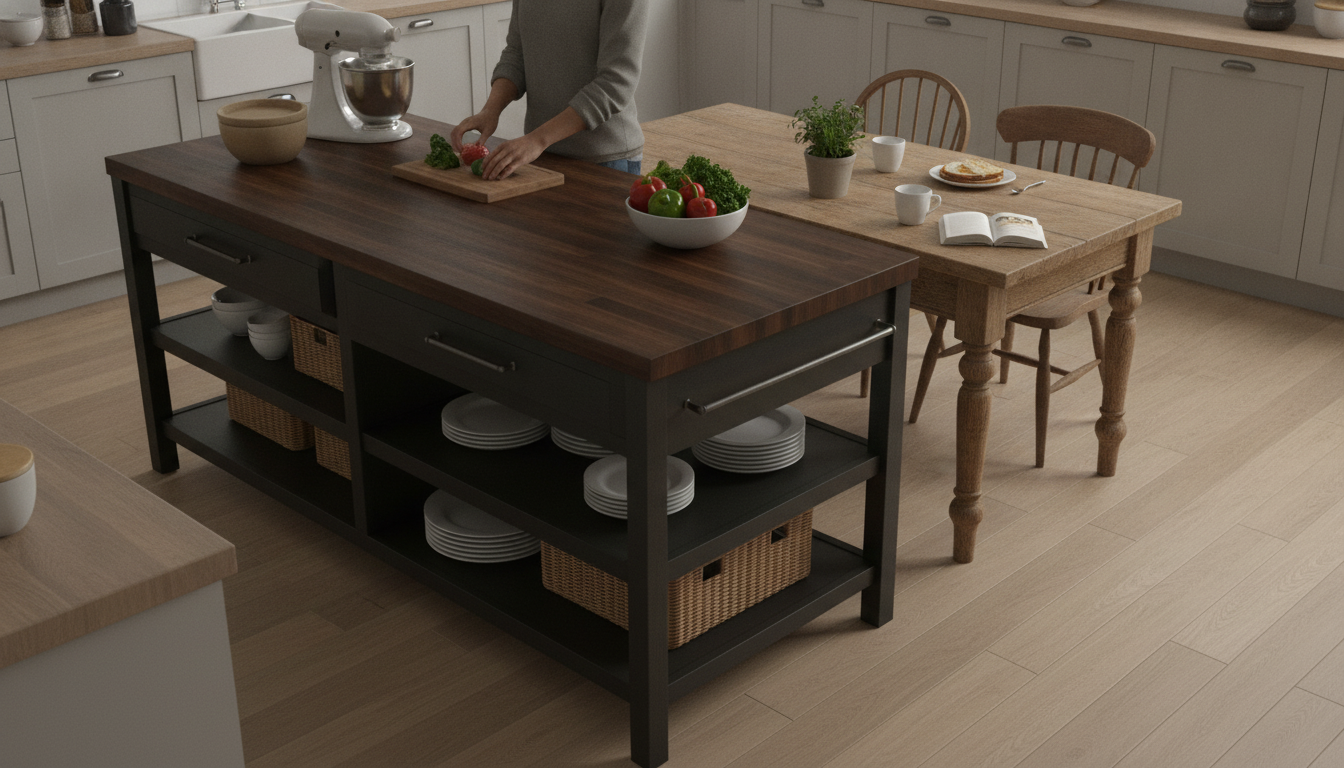
A kitchen island isn’t automatically a table, but it can function like one. The main difference is purpose and construction: an island is typically a fixed or semi-fixed work hub designed for prep, storage, and traffic flow, while a table is primarily meant for seating and dining.
When a kitchen island counts as a “table”
A kitchen island can feel like a table when it’s set up for everyday meals—especially if it has an overhang for knee clearance, comfortable stool spacing, and enough surface area for place settings. If the island’s primary role in your kitchen is where people sit, eat, and linger, it’s essentially acting as a table, even if it also stores cookware or hides outlets.
When it’s clearly an island (not a table)
If the surface is dominated by a cooktop, sink, or heavy prep zone, it behaves less like a table and more like a workstation. Islands also tend to be taller than standard dining tables and may be positioned to control kitchen circulation rather than align with dining seating. Add in cabinets, drawers, trash pull-outs, and appliances, and it becomes more “built-in furniture” than a typical table.
Choosing between an island, a table, or a hybrid
Decide based on what the kitchen needs most: extra storage, more counter space, or a dedicated eating spot. In smaller kitchens, a movable island or an island-table hybrid can provide prep space without committing to a permanent layout. For sizing, seating clearances, and layout ideas that keep walkways comfortable, see the full guide here: https://candoral.com/guide-kitchen-island-table-with-storage-sizing-layout-tips/.
For Kitchen Island vs Table: When It Counts as One, the best answer depends on fit, material, care instructions, and how the product will be used day to day.
FAQ
What is the difference between a kitchen island and a kitchen table?
A kitchen island is designed to add workspace and storage and is often built in or sized to anchor the room. A kitchen table is mainly for dining and gathering, with more emphasis on legroom and chair comfort.














Leave a comment