1:14 RC Excavator Truck for Backyard Digging & Play
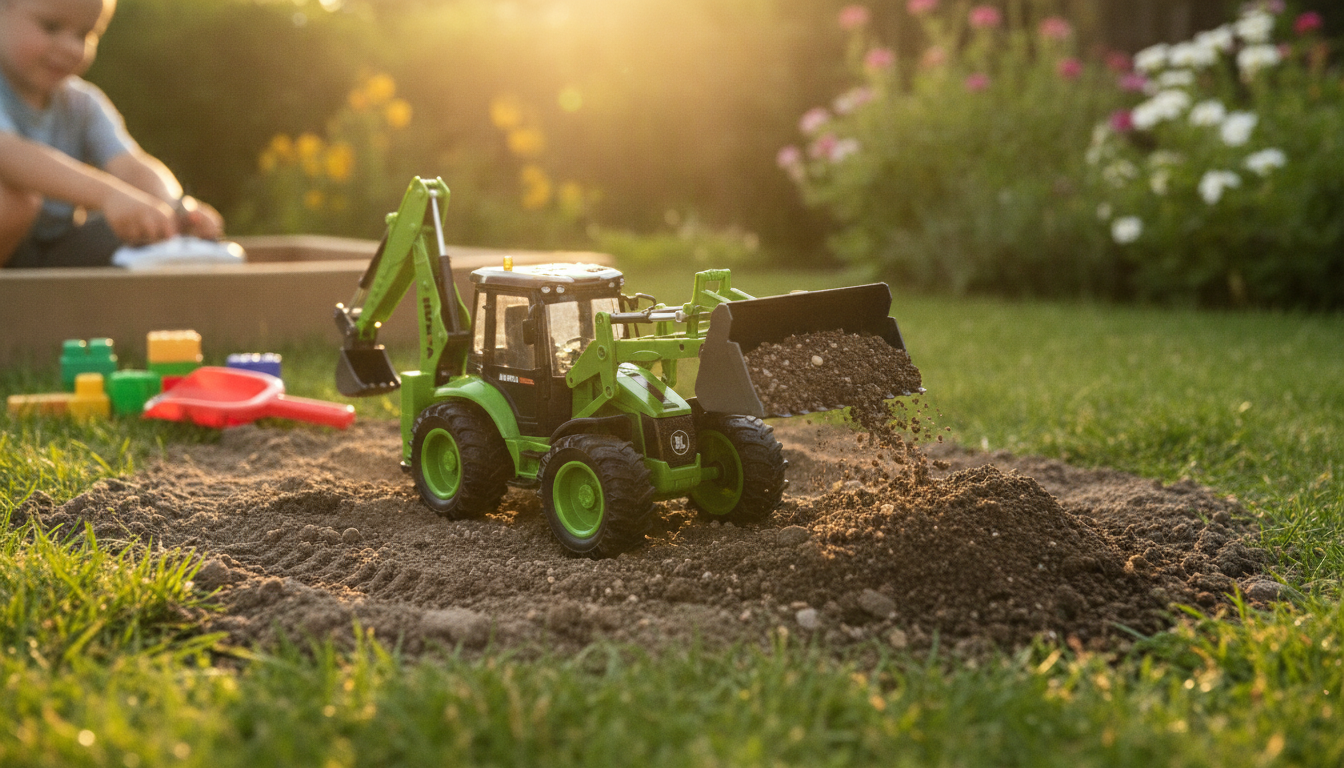
1:14 RC Excavator Construction Truck: Realistic Digging Play for Home Job Sites
A 1:14 scale RC excavator brings the feel of a construction site to a driveway, sandbox, or living-room “build zone.” With articulated arm movement and a working bucket, this type of model is built for scooping, loading, and role-play—while also helping kids (and grown-up hobbyists) practice coordination and patience through hands-on control.
For anyone setting up a backyard “job site,” the 1:14 RC Excavator Construction Truck is sized to look substantial without being hard to store, and it’s designed for the kind of repeatable tasks that make RC construction play so satisfying: dig, lift, swing, dump, and start again.
What a 1:14 RC excavator is best at
- Sandbox and dirt-pile play: digging, scraping, leveling, and carrying small loads (sand, soil, small gravel, bark).
- Construction role-play: set up “work orders” like trenching a line, building a mound, or loading a dump area.
- Skill-building: improves fine motor control and sequencing (extend boom, curl stick, scoop, lift, swing, dump).
- Indoor-friendly options: works well on kinetic sand or a shallow sensory bin when outdoor conditions aren’t ideal (keep grit away from moving joints).
Standout features to look for in an RC excavator truck
- Arm articulation: separate movements for boom, stick, and bucket make digging feel more realistic than single-joint toys.
- Turret rotation: a wide swing range allows digging in one spot and dumping to the side without repositioning the tracks/wheels.
- Control responsiveness: smoother starts/stops help avoid spilling loads and make precision work easier for beginners.
- Lights and sound (if included): adds immersive play; useful in dusk conditions, but should be easy to toggle off for quiet play.
- Scale presence: 1:14 offers a satisfying size for handling and display without requiring a large storage footprint.
Performance on real surfaces
- Sand: best for clean scoops and predictable bucket fills; slightly damp sand typically packs better than dry powdery sand.
- Soil and mulch: workable for light digging; avoid roots, stones, or compacted ground that can strain joints or gears.
- Gravel: use for pushing and leveling rather than deep scooping; small gravel can jam linkages if it gets into pivots.
- Hard floors: suitable for driving and practicing arm motions without load; use a mat to reduce scuffs and noise.
- Slope handling: keep grades mild; excavators can tip when the arm is extended with a load—practice dumping close to the body for stability.
Battery, charging, and playtime planning
- Runtime expectations: plan sessions around battery cycles—short breaks for charging can double as “refuel and inspection” role-play.
- Charging habits: allow the battery to cool before charging; unplug after the recommended charge window to reduce wear.
- Spare power strategy: if spare batteries are available, keep them labeled and rotate use to maintain consistent performance.
- Storage: for longer breaks between play sessions, store in a cool, dry place and avoid leaving batteries fully depleted for extended periods.
For general lithium-ion safety practices (charging location, supervision, and handling), review guidance from the NFPA.
Build quality and durability checkpoints
- Joint tightness: arm pivots should feel firm (minimal wobble) while still moving smoothly under power.
- Bucket edge: a slightly reinforced lip helps with scooping and scraping without deforming from normal play.
- Track/wheel area: debris shields and good clearance reduce the chance of sand and grit lodging in moving parts.
- Body shell fit: panels should align without gaps that invite dirt; fasteners should stay secure after vibration.
- Best practice: brush off sand/soil after each session and avoid washing with running water unless the manufacturer explicitly states it’s safe.
For broader toy safety and recall awareness, the U.S. Consumer Product Safety Commission (CPSC) is a useful reference point.
Quick-start setup and first “job site” routine
- Charge fully before the first run to calibrate expectations for playtime and power.
- Test controls with no load: practice lifting, curling, and swinging the boom slowly to learn the movement limits.
- Set a small “dig zone”: a shallow tray or defined sandbox area keeps mess contained and improves precision practice.
- Start with simple tasks: scoop → lift → rotate → dump into a marked container; then try trenching and leveling.
- End-of-day reset: remove debris from pivots and tracks/wheels, wipe the body, and store with controls switched off.
Safety and age-fit considerations
If you’re curious about why RC toys must meet radio-device requirements, the FCC equipment authorization overview explains the compliance framework at a high level.
At-a-glance specs and what to compare
| Item | Details |
|---|---|
| Model | 1:14 RC Excavator Construction Truck |
| Availability | In stock |
| Price | 71.47 USD |
| Best use | Sandbox/dirt digging, scooping, loading, and pretend construction tasks |
| Care note | Brush off grit after play; keep electronics away from water and heavy mud |
Common issues and simple fixes
More in-stock picks
FAQ
Can an RC excavator actually dig in dirt?
Yes—on loose or lightly packed soil and sand, it can scoop and move small loads. Performance drops in compacted ground or rocky areas, so smaller scoops and shorter arm extensions help prevent strain.
Is a 1:14 RC excavator a good gift for kids?
It’s often a great fit for kids who enjoy hands-on vehicles and building play. For younger children, supervised use is recommended because of moving joints, pinch points, and small components.
How should the battery be charged and stored?
Charge on a non-flammable surface, don’t leave charging unattended, and let the battery cool before charging. Store in a cool, dry place and avoid long-term storage while fully depleted.













Leave a comment