3D Wooden Globe Puzzle: Build, Display, and Gift Guide
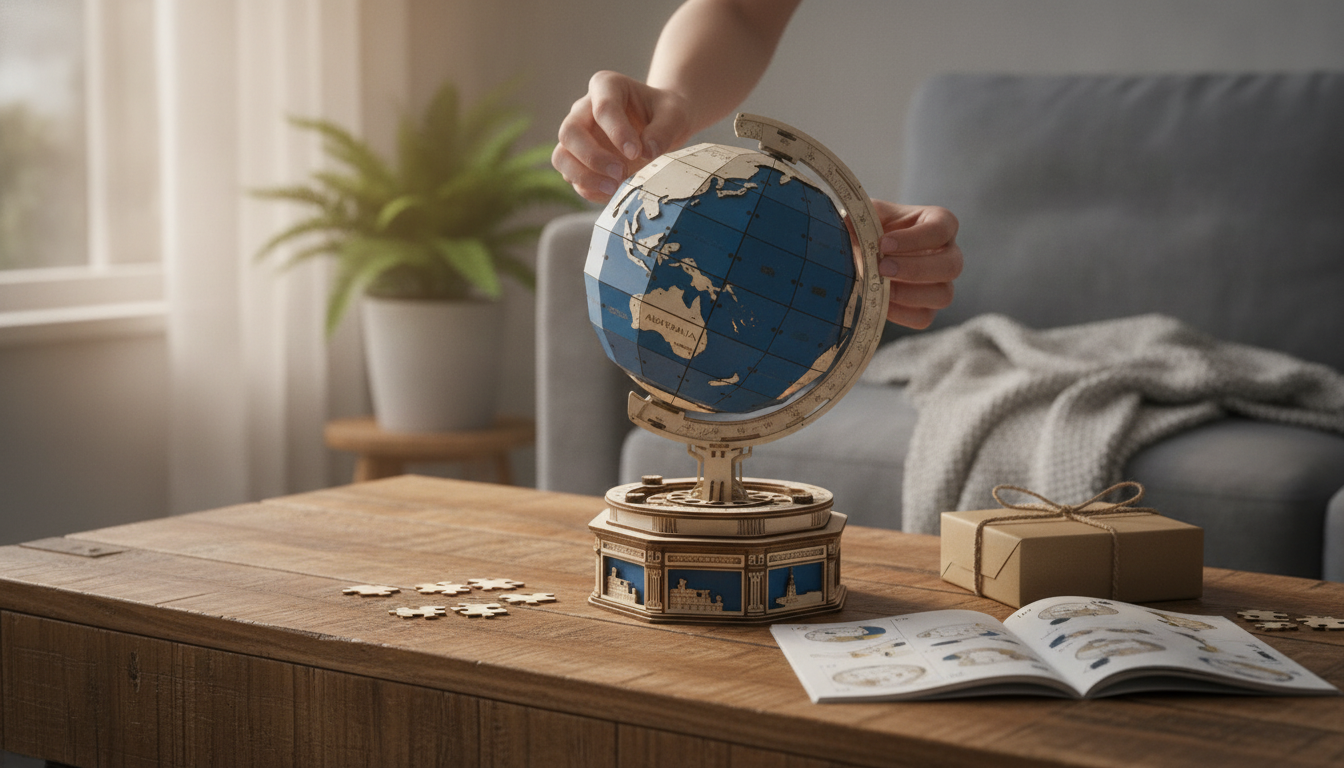
3D Wooden Globe Puzzle: A Hands-On Build That Becomes Desk Decor
A 3D wooden globe puzzle combines the satisfaction of a model build with the lasting appeal of a display piece. With precisely cut wooden components and a globe form that looks at home on a shelf or desk, it works as a focused solo project, a family activity, or a gift that feels more personal than a standard puzzle. The guide below breaks down what to expect, how to assemble smoothly, and how to care for the finished globe so it stays beautiful over time.
What This Type of Globe Puzzle Is
A 3D wooden globe puzzle is a buildable model made from interlocking wooden parts that form a sphere-like globe shape. Instead of snapping together like plastic pieces, it leans on precision-fit tabs and slots that you press into place as the structure takes shape.
What makes it different from a “finish it and put it away” puzzle is that it’s designed to be handled during assembly and then displayed as a decorative object for home or office. Some designs also include movable elements—like a rotating stand or a turning axis—depending on the kit’s structure.
It’s a good match for makers who enjoy step-by-step construction and want a tactile, screen-free project. If you’ve ever liked model kits, woodworking mini-projects, or mechanical builds, a wooden globe puzzle tends to scratch that same itch.
Why It’s a Great Gift and Display Piece
The appeal comes in two parts: the build experience and the finished keepsake. When it’s given as a gift, the time spent assembling becomes part of the value—either because the recipient gets the relaxing process, or because you build it and gift the completed decor with a story behind it.
It also fits a lot of moments: birthdays, graduations, housewarmings, teacher appreciation, and hobby-focused gifting. A globe reads as thoughtful without being overly personal, and it feels “collected,” even when it comes from a kit.
Stylistically, warm wood tones are easy to place. They pair naturally with modern and Scandinavian interiors, blend into rustic spaces, and complement vintage-inspired desks and shelving. And because it looks like decor first, it tends to become a conversation starter—people notice it, then ask how it was assembled.
Quick Specs Snapshot
Before buying, it helps to confirm the practical details: price, availability, and what arrives in the box. If it’s intended for gifting, look for clear instructions and check whether tools or glue are required.
| Item | Details |
|---|---|
| Product | 3D Wooden Globe Puzzle |
| Price | $35.01 USD |
| Availability | In stock |
| Product page | https://candoral.com/3d-wooden-globe-puzzle/ |
Assembly Overview: What to Expect
Set yourself up for success with a clean, well-lit workspace. Small parts are easier to align when the surface is uncluttered, and good lighting helps you see whether tabs are fully seated or slightly angled.
A reliable approach is to dry-fit first. Test how connections meet before pressing pieces all the way into place—this reduces the chance of splitting thin sections and helps you spot when a part is rotated the wrong direction.
Many globe-style builds are easiest when handled as sub-assemblies. Build rings, segments, or hemispheres first (depending on the design), then connect them into the final globe form. That keeps the build stable and makes alignment less finicky.
During assembly, gentle pressure beats force. If a joint feels stuck, back it out, re-check alignment, and try again. Forcing a tight tab can crush edges or leave bright compression marks on the wood.
Tips for a Cleaner Finish
Who It’s Best For
- Hobby builders who enjoy model kits, mechanical builds, or hands-on crafts.
- Families looking for a shared weekend activity that ends with a display-worthy object (rather than a puzzle that goes back in the box).
- Students and teachers who want geography-themed decor for a study space—decor-first rather than a detailed classroom map tool. For background on what a globe represents, see Encyclopaedia Britannica’s overview of globes.
- Gift shoppers who want something that feels premium without taking up much space.
Care, Storage, and Longevity
Also consider where it will live day to day. A stable shelf is better than a narrow ledge or the edge of a frequently used desk where it can be bumped. If kids will handle it, review general small-parts guidance from the U.S. Consumer Product Safety Commission (CPSC).
Easy Ways to Style It with Other Decor
- 3D Wooden Globe Puzzle as the centerpiece for a desk, bookcase, or entry console.
- Scandinavian Modern Luxury TV Stand to anchor a living room display with warm, minimal lines that complement wood tones.
- Luxury Transparent Glass Bird Cage for Outdoor & Home Decoration as a sculptural accent on a shelf—especially effective alongside books and natural textures.
FAQ
Does a 3D wooden globe puzzle need glue?
Many wooden puzzle kits are designed for friction-fit assembly, so glue often isn’t required. Requirements vary by kit, so check the included instructions and use glue only if specified or if you’re reinforcing a joint after confirming the fit.
How long does it usually take to assemble?
Most builders can expect anywhere from 1 to 4 hours depending on complexity, pace, and experience. Dry-fitting, sorting parts ahead of time, and taking short breaks can make the process smoother and sometimes faster.
Is it suitable for kids?
It depends on age, the presence of small parts, and whether an adult can supervise. It often works best as a shared build for younger kids, while older kids and teens who can follow instructions carefully may enjoy it as an independent project.











Leave a comment