4-Pack 10,000 lb Ratchet Straps with Double J Hooks
4-Pack Ratchet Tie-Down Straps (10,000 lb Break Strength) with Double J Hooks for Cargo
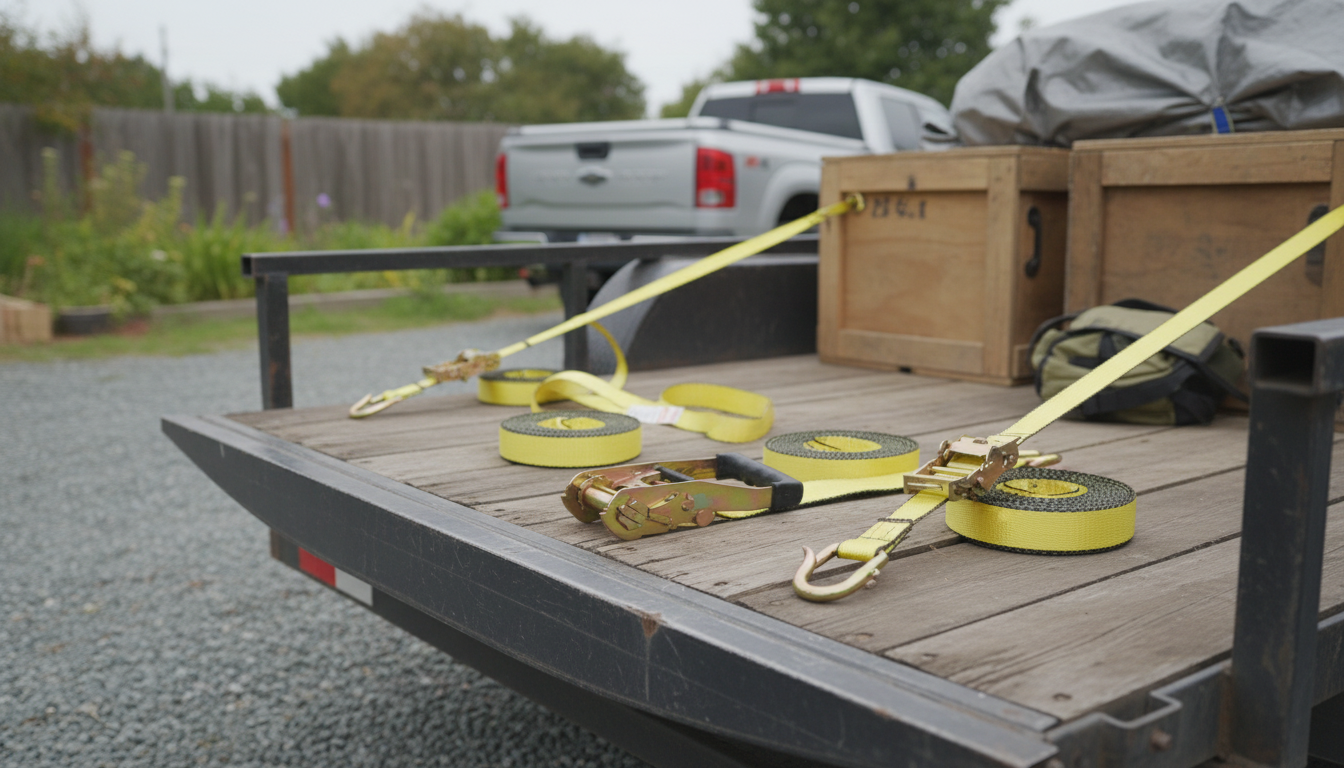
Keeping cargo stable on a trailer, truck bed, roof rack, or flatbed depends on strong webbing, reliable hardware, and correct tensioning. This 4-pack set of ratchet tie-down straps combines a high break-strength rating with double J hooks for secure attachment points, making it a practical option for moving equipment, appliances, motorcycles, and bulky loads. With four matching straps, it’s easier to build balanced tie-down patterns that resist shifting during starts, stops, wind gusts, and uneven pavement.
What These Ratchet Straps Are Built For
Ratchet straps are designed to create controlled clamping force that holds cargo in place without relying on knots or “best guess” friction. This 4-pack setup is especially useful when loads require multiple securement points rather than one strap pulled extremely tight.
- Securing cargo during transport on open or enclosed trailers, pickup beds, flatbeds, and utility racks
- Reducing load shift with controlled ratcheting tension rather than relying on knots or friction alone
- Hooking into common anchor points such as D-rings, stake pockets, and trailer rails using double J hooks
- Packing a consistent setup: four matching straps for balanced tie-down patterns on larger loads
Key Specs and What They Mean in Real Use
“10,000 lb break strength” is a headline number, but the most important planning number is the working load limit (WLL) listed by the manufacturer. Break strength is the maximum load the system can tolerate before failure under controlled conditions, while WLL is a lower, safety-focused rating used for everyday securement decisions.
Double J hooks are a common choice for trailers and truck anchor points because they’re shaped to seat under load. For the best hold, the hook should align with the direction of pull—avoid side-loading (twisting force) that can reduce security or damage anchor points over time.
| Feature | What to look for | Why it matters |
|---|---|---|
| Pack size | 4 straps | Supports 4-point tie-down patterns and redundancy |
| Rated strength | 10,000 lb break strength | Higher margin for demanding loads (plan by WLL, not break strength) |
| Hook style | Double J hook | Secure seating in many trailer/truck anchor points |
| Tensioning method | Ratchet | Fine control and strong clamping force |
| Common uses | Cargo, equipment, large items | Versatile for transport and storage securing |
When tightening, aim for “stable and immobile,” not “as tight as possible.” Over-tensioning can crush boxes, dent appliance panels, or overload anchor points. For delicate edges, adding padding or edge protectors helps prevent webbing wear and cargo damage.
How to Use Ratchet Tie-Down Straps Safely
- Inspect before each use: Check webbing for cuts, fraying, melted fibers, UV brittleness, or chemical damage. Replace straps that show structural wear.
- Choose solid anchor points: Use anchors intended for securement (D-rings, rails, stake pockets). Avoid thin or sharp sheet metal points that can deform or slice webbing.
- Route straps to minimize rubbing: Keep webbing from sawing against rough edges; use corner/edge protectors on sharp cargo corners.
- Tighten until cargo is stable, then stop: Excess force can damage cargo or bend anchors. The ratchet makes it easy to overdo it—use controlled tension.
- Re-check after a short drive: Loads can settle. A quick stop to re-tension is often the difference between a stable haul and a shifting load.
- Release carefully: Keep hands clear of pinch points and open the ratchet slowly to prevent snap-back.
For additional guidance, review the FMCSA cargo securement rules and general load safety recommendations from NHTSA, especially when carrying items on roof racks or dealing with tall, wind-sensitive loads.
Best Practices for Different Cargo Types
- Appliances and furniture: Place padding under the strap where it crosses corners or trim. Two straps (high/low) can reduce tipping—especially on tall items like dressers or cabinets.
- Motorcycles and powersports: Use appropriate contact points and consider soft loops where needed. Compress suspension slightly to stabilize, but avoid bottoming out or bending components.
- Lumber and long loads: Use multiple straps spaced along the length. Add a stabilizing strap near the rear to reduce tail swing and keep boards from fanning out.
- Boxes and mixed loads: Containment (bins, nets, side rails) plus straps often beats straps alone. Prevent small items from migrating into gaps where straps loosen.
Care, Storage, and Longevity
When This 4-Pack Makes Sense
In-Stock Picks for Hauling and Moving
- 4PK Ratchet Tie Down Straps 10000 lb Break Strength with Double J Hook for Cargo (4-pack for balanced tie-down patterns)
- Modern Nightstand with Storage – 2 Fabric Drawers, Wood Top, Steel Frame (a good example of furniture that benefits from padded strap placement when moving)
- Bamboo Breakfast Tray with Folding Legs for Sofa Bed, Adjustable Serving Laptop Desk (lightweight, easy to shift—best secured in a bin or against a solid surface before strapping)
FAQ
What’s the difference between break strength and working load limit?
Break strength is the maximum load the strap system can handle before failing under controlled conditions. Working load limit (WLL) is a much lower rating intended for real-world securement decisions, so plan tie-downs using the manufacturer’s WLL whenever it’s available.
Are double J hooks safe for trailer D-rings and truck anchor points?
Yes, double J hooks are commonly used with D-rings, rails, and similar anchors when properly seated. Make sure the hook is aligned with the pull (not side-loaded) and avoid anchors that are damaged, undersized, or not rated for securement.
How often should ratchet straps be replaced?
Replace straps when webbing shows cuts, heavy fraying, melted fibers, or damaged stitching, or if hardware is bent, badly corroded, or the ratchet slips under load. It’s also smart to retire straps after any shock-load event where the cargo shifted violently.















Leave a comment