Modern Cat Tree with Condos, Hammocks & Scratch Posts
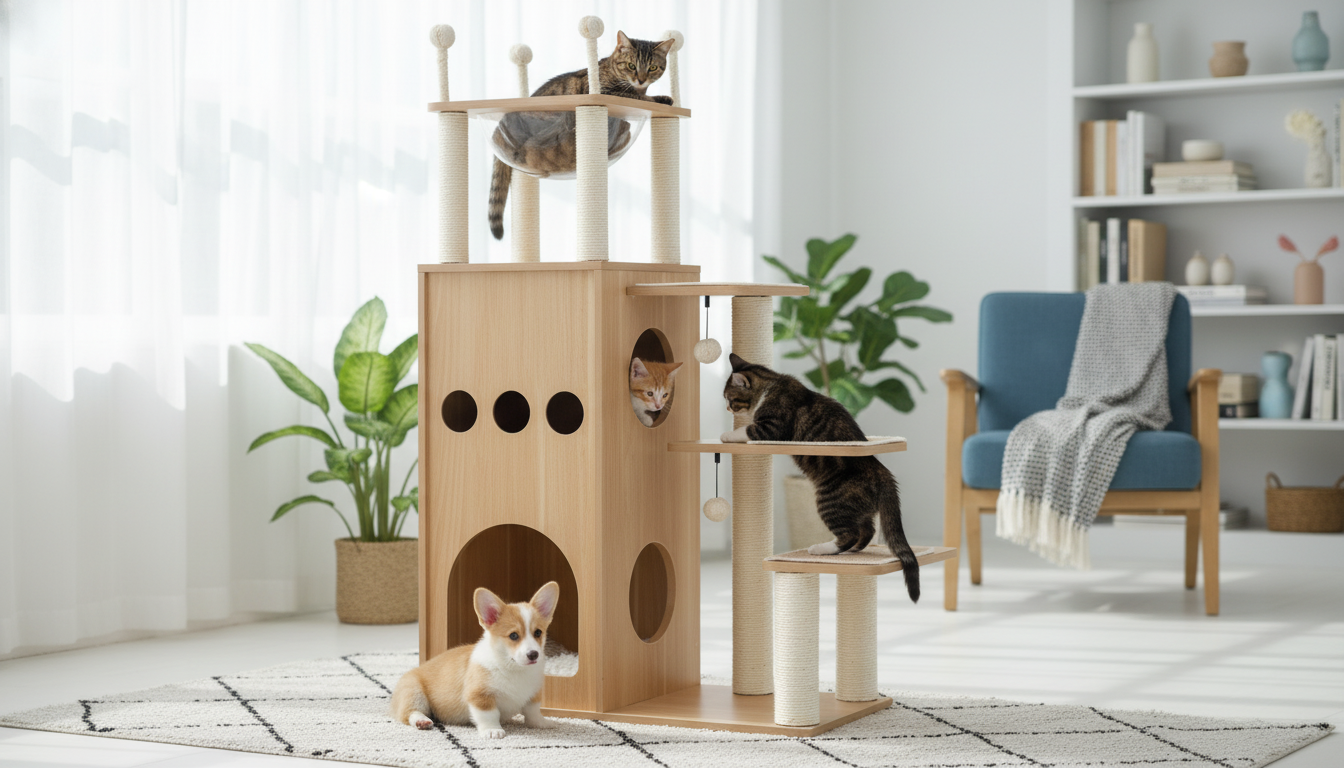
Modern Cat Tree with Spacious Condos, Hammocks & Scratch Posts
A well-designed cat tree can turn unused vertical space into daily enrichment—climbing, lounging, hiding, and scratching in one place. This modern setup pairs roomy condos with hammock-style lounging and scratch-ready posts to help cats feel secure, active, and at home without overwhelming a room’s look.
What Makes a Cat Tree Feel “Right” to Cats
Cats don’t just “use” a cat tree—they evaluate it for safety, comfort, and control of their surroundings. When those boxes are checked, the tree becomes a reliable part of their routine rather than a piece of furniture they ignore.
- Vertical territory supports natural climbing and lookout behavior, especially in multi-pet homes.
- Enclosed condos provide retreat spaces that reduce stress and support naps and quiet time.
- Hammocks add a cradled lounging option that many cats prefer over flat platforms.
- Scratch posts help protect furniture by giving cats an appropriate place to mark, stretch, and maintain claws.
- Multiple levels and routes reduce bottlenecks so cats can pass without confrontation.
These elements align with widely recommended feline environmental needs—providing safe resting spots, climbing options, and appropriate scratching surfaces. For more detail on building a supportive home setup, see the American Association of Feline Practitioners (AAFP) guidelines.
Key Features: Spacious Condos, Hammocks, and Scratch Posts
Modern cat trees tend to look cleaner and feel more “intentional” in a room, but the real win is how the structure supports everyday cat behaviors without needing separate scratchers, beds, and hideouts.
- Spacious condos: Look for entrances that allow easy turnarounds and enough interior room for relaxed side-sleeping.
- Hammocks: Best when positioned as a mid-level “rest stop” and made from a supportive, easy-to-clean fabric.
- Scratch posts: Taller posts encourage a full-body stretch; multiple scratch zones reduce competition between cats.
- Stable base: A wide footprint and balanced layout help prevent tipping during jumps or play sessions.
- Modern look: Neutral tones and clean lines can blend with contemporary interiors while still meeting cat needs.
Feature-to-Benefit Guide
| Feature | Why it matters | What to look for |
|---|---|---|
| Spacious condos | Adds privacy and a safe retreat; supports longer naps | Openings that fit adult cats; interior room to curl or stretch |
| Hammock loungers | Cradles the body and feels secure; reduces pressure points | Taut, supportive fabric; secure attachment points |
| Scratch posts | Supports claw care and marking; helps prevent furniture scratching | Durable wrap; enough height for a full stretch |
| Multi-level platforms | Encourages climbing and play; offers multiple resting choices | Easy routes up/down; non-slip surfaces |
| Sturdy base | Improves safety and confidence during use | Wide base; balanced center of gravity |
Choosing the Right Size and Layout for Your Home
The best cat tree is the one your cat can access easily and use confidently every day. Layout matters as much as height, especially when multiple pets share the space.
- Match the overall footprint to the intended location (corner placement vs. open wall) while preserving walking space.
- If multiple cats will share it, prioritize more than one lounging zone at similar heights to reduce guarding behavior.
- Consider how cats prefer to move: some like long, gradual steps; others prefer fewer, higher jumps.
- Place condos where a cat can retreat without being trapped—avoid tight corridors where another pet can block exits.
- For heavier or less agile cats, lower hammock placement and wider platforms improve comfort and confidence.
If possible, measure the area and sketch a quick “cat path” from floor to top platform. A smooth route (with an alternate way down) often gets more use than a taller tree that feels awkward to climb.
Where to Place It for Daily Use
Placement can make the difference between a cat tree that becomes the favorite spot and one that’s only used occasionally.
Comfort, Materials, and Maintenance
For practical claw-care basics and grooming reminders that pair well with a scratch-friendly setup, the ASPCA’s cat grooming tips are a helpful reference.
Safety and Stability Checklist
A Modern Cat Tree Option to Consider
- Modern Cat Tree with Spacious Condos, Hammocks & Scratch Posts ($203.01): a single-piece solution designed to combine private condos, hammock lounging, and scratching zones.
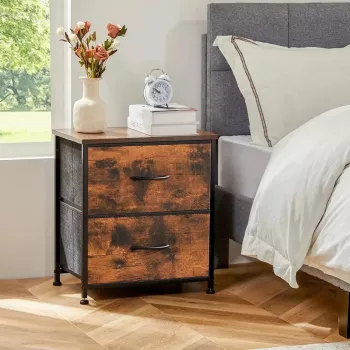
- For a tidy “cat station” nearby, a small storage piece can keep brushes, treats, and wand toys in one spot, such as the Modern Nightstand with Storage – 2 Fabric Drawers, Wood Top, Steel Frame ($26.51).
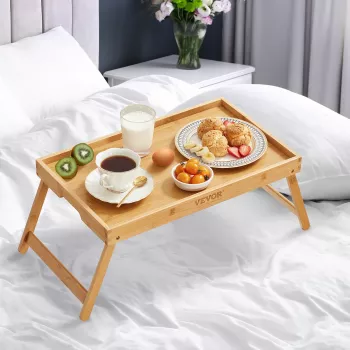
- If you like to work or relax near your cat’s setup (especially by a window), a lightweight surface can help keep items off the cat tree platforms, like the Bamboo Breakfast Tray with Folding Legs for Sofa Bed, Adjustable Serving Laptop Desk ($29.82).
FAQ
Will a cat use a new condo or hammock right away?
Some cats explore immediately, while others take a few days to warm up. Place the tree in a familiar area, add a small treat trail, and let your cat investigate at their own pace without being pushed into the condo.
How can scratching posts on a cat tree help stop furniture scratching?
Put the tree near the furniture your cat is currently scratching and reward any use of the post. A stable, tall post that doesn’t wobble is more satisfying to scratch, which makes it easier for your cat to choose it over upholstery.
What’s the best place to put a cat tree in a small apartment?
Set it near a window or in the main living area where your cat already spends time, with a clear approach path. Corner placement can save floor space while still giving your cat vertical territory and a comfortable resting spot.













Leave a comment