Resin Whale Sculpture: Modern Living Room Floor Accent
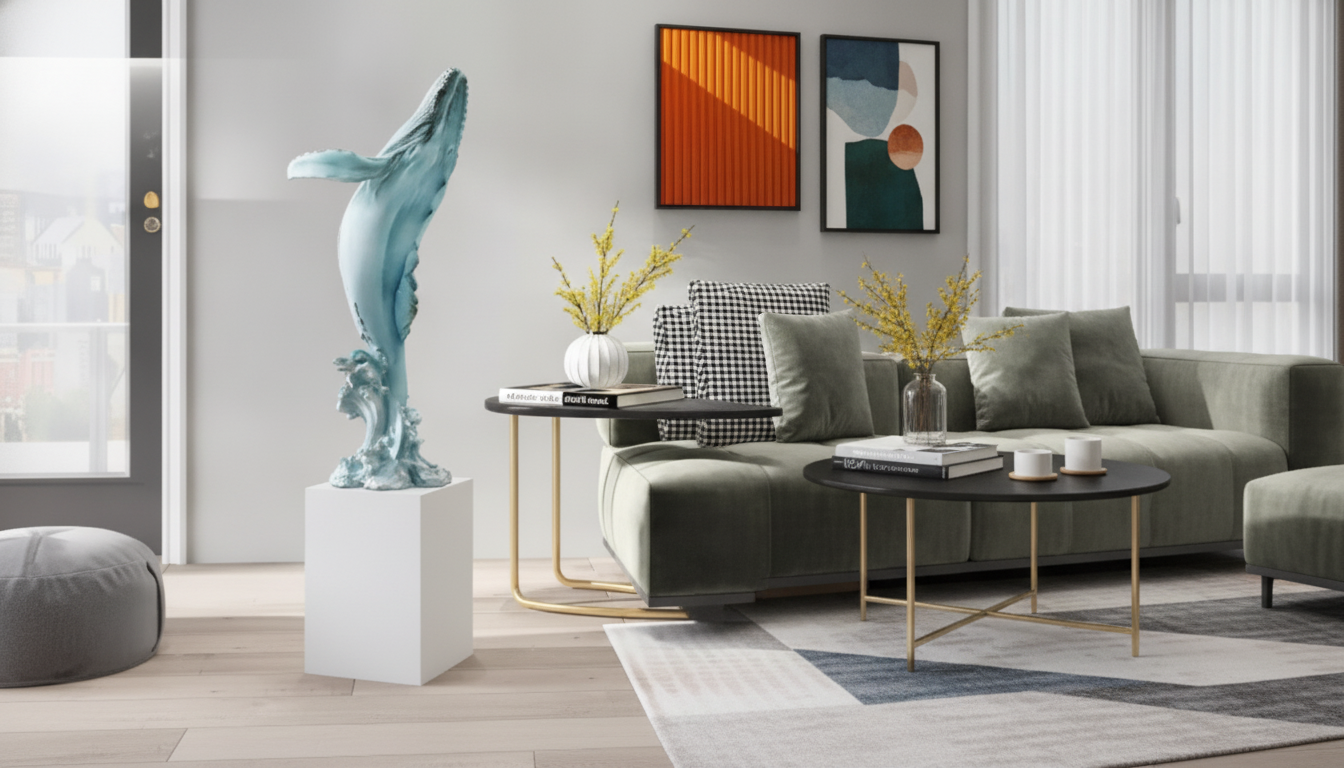
Large Resin Whale Sculpture for Modern Floor Decor in the Living Room
A large whale sculpture can anchor a living room the way a statement sofa or oversized art can—by setting mood, scale, and direction for the rest of the space. Resin makes the look sculptural and gallery-like while staying easier to place and maintain than stone or metal. With its sweeping form and calm ocean reference, a floor-standing whale instantly adds presence without crowding the room with extra furniture.
Why a Whale Sculpture Works as a Living Room Centerpiece
Whales are naturally “architectural” shapes—long lines, soft curves, and a silhouette that reads from across the room. That’s exactly what modern living rooms often need: one confident form to balance clean-lined seating and flat surfaces.
- Strong silhouette: the sweeping curve reads clearly from across the room, even in minimalist interiors.
- Calming theme: ocean-inspired forms add a relaxed, resort-like tone without feeling seasonal.
- Versatile styling: pairs with modern, Scandinavian, coastal, and eclectic rooms depending on surrounding textures.
- Visual balance: the long horizontal body can counterbalance tall bookcases, large windows, or high ceilings.
For a subtle layer of meaning, whales are also widely associated with intelligence and migration—an idea of quiet movement that complements serene spaces. For a quick refresher on whale species and marine life context, the Smithsonian Ocean overview of whales is a helpful reference.
Material Spotlight: What Resin Adds to Modern Floor Decor
Resin is one of the most practical ways to get a “gallery object” look at a livable weight and with finishes that feel intentional in contemporary interiors.
- Crisp detail: resin holds fine contours and smooth gradients that read like a gallery sculpture.
- Practical placement: typically lighter than stone and less prone to denting than some softer materials.
- Finish flexibility: resin can mimic polished lacquer, matte ceramic, or stone-like textures depending on coating.
- Care advantage: routine dusting and gentle wiping are usually sufficient; avoid harsh solvents that can dull finishes.
Modern interiors often rely on contrast—smooth next to textured, curved next to rectangular. Resin plays well in that mix because it can look refined without feeling delicate.
Choosing the Right Spot: Layout Ideas That Look Intentional
A large floor sculpture looks best when it has “breathing room,” like art in a gallery. Before placing it, check sightlines from the main seat, the entry, and the TV wall—those are the angles that make the piece feel purposeful rather than like an afterthought.
Placement Guide for a Large Floor Sculpture
| Placement | Best for | Quick styling tip |
|---|---|---|
| Next to a TV stand | Modern, clean-lined rooms | Echo the sculpture’s curve with a rounded vase or arc lamp nearby |
| Corner near a window | Bright rooms with sheer curtains | Add a low plant to create a layered height transition |
| End of sofa | Open-concept seating areas | Keep nearby tables minimal so the sculpture remains the focal point |
| Along a blank wall | Rooms lacking large art | Pair with a single oversized frame or wall sconce—avoid gallery clutter |
Styling Combinations: Color, Texture, and Lighting
When considering proportion and visual harmony, design publications often emphasize scale and negative space as much as color. Browsing room examples on Architectural Digest’s interior design features can be useful for seeing how sculptural objects are staged with fewer, larger elements.
Care and Longevity in Real Homes
If your living room is sun-filled and you’re mindful about placement near windows, it’s also worth understanding broader environmental considerations around marine life. NOAA’s marine mammals resource is an authoritative overview that adds context to ocean-inspired decor themes.
Featured Piece: Large Resin Whale Sculpture
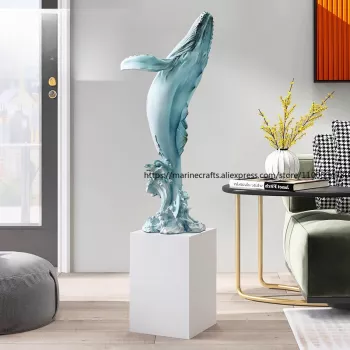
For a floor-standing statement that reads modern and sculptural, the Large Resin Whale Sculpture Modern Floor Decor for Living Room is designed to bring presence to living rooms and open-plan spaces. It suits clean-lined, low-profile furniture and looks best when styled as a deliberate vignette rather than surrounded by many small items.
Complementary Decor Pairings for a Cohesive Room
- Ground the media zone: a streamlined console like the Scandinavian Modern Luxury TV Stand keeps the room visually calm and lets an organic sculpture provide contrast.
- Keep the corner airy: a transparent accent such as the Luxury Transparent Glass Bird Cage for Outdoor & Home Decoration can add shine and structure without adding heaviness near a large floor object.
- Repeat one finish note: mirror a tone from the sculpture (warm white, soft gray, or black accents) in a throw pillow, a single vase, or one framed piece across the room for unity.
FAQ
How big should a floor sculpture be for a living room?
Aim for a size that visually relates to nearby furniture—roughly comparable to the height of a sofa arm or the scale of a TV console—so it reads intentional. Leave visible negative space around it so it doesn’t look like knee-high clutter, especially in larger rooms.
Does resin decor scratch easily, and how can it be protected?
Resin is generally durable for indoor decor, but the surface can scratch if dragged against gritty floors or cleaned with abrasives. Use felt pads under contact points, lift rather than drag when moving it, and dust with a microfiber cloth to avoid fine scuffs.
Where should a large sculpture go in an open-concept living room?
Place it near transitions (entry-to-living or dining-to-living) to act as a zone marker while keeping walkways clear. Pair it with one supporting element—like a floor lamp or a plant—so it reads as a deliberate vignette rather than an obstacle.










Leave a comment