Wooden Play Kitchen Set + Accessories for Kids 3+
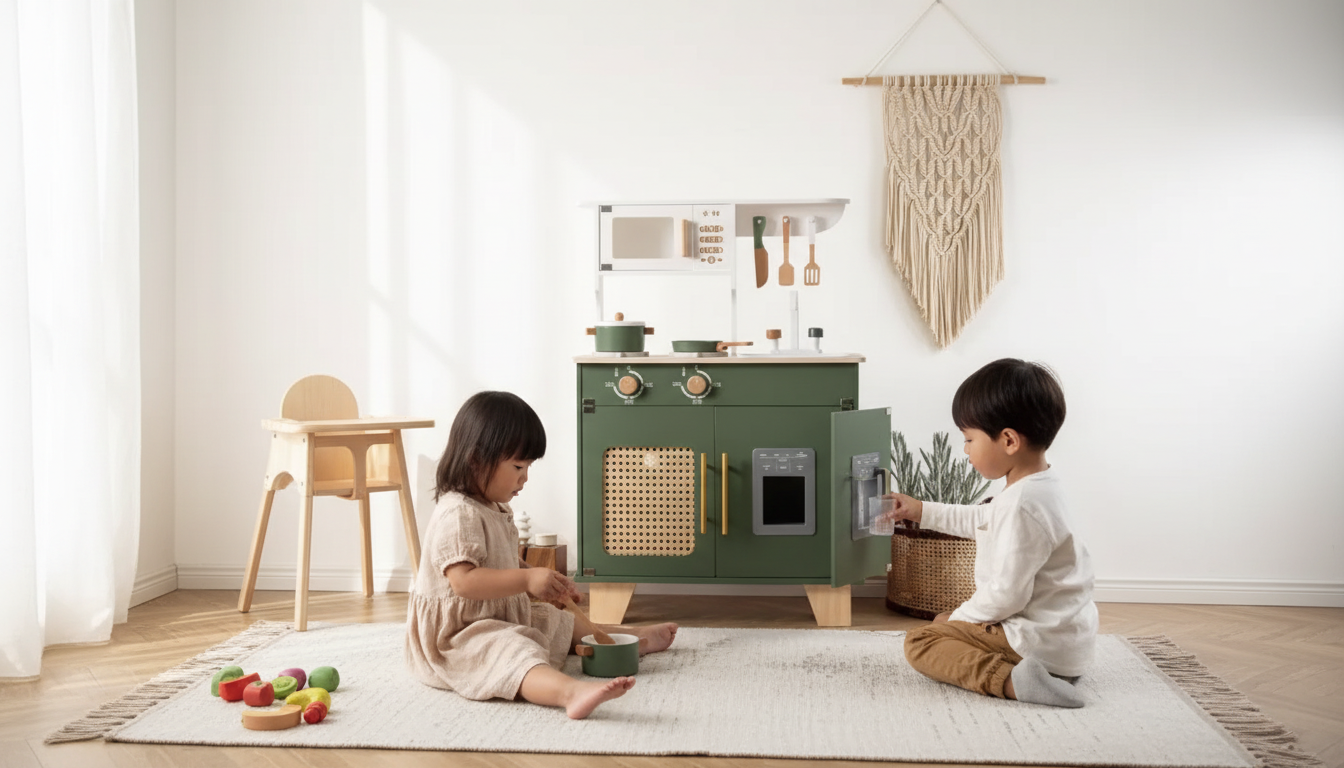
A wooden play kitchen with accessories creates a dedicated spot for pretend cooking, sharing, and storytelling. With sturdy materials and hands-on pieces, kids can practice everyday routines—washing, cooking, serving—while building language, coordination, and social skills during solo play or playdates.
What Makes a Wooden Play Kitchen Special
A pretend kitchen is one of those toys that rarely feels “finished,” because kids keep rewriting what it is. One day it’s a family kitchen, the next it’s a café with a pastry counter, and later it becomes a restaurant where everyone has a role.
- Invites open-ended play: the same set becomes a café, bakery, family kitchen, or restaurant depending on the day.
- Encourages role-play and conversation: taking orders, describing ingredients, and narrating steps builds vocabulary and confidence.
- Supports skill-building through play: turning knobs, placing items, and organizing shelves strengthen fine-motor control and planning.
- Wooden construction tends to feel sturdy and stable for energetic play and repeated use.
- A dedicated play station helps contain accessories, making cleanup more predictable.
What’s Included and How Kids Use the Accessories
Accessories are what turn a cute kitchen into a full pretend routine. When kids can “prep,” “cook,” and “serve,” play naturally expands into storytelling, cooperation, and simple learning games.
- Cooking and serving pieces make play feel real: kids can run a beginning-to-end routine and repeat it with new “recipes.”
- Accessories support group play: one child can cook while another sets the table or plays cashier.
- Pretend utensils and food encourage sorting: by type, color, or meal category—an easy early-math activity.
- Reusable scenarios: breakfast rush, birthday baking, grocery delivery, or “cooking show” performances.
- Removable pieces store best with a small bin nearby so everything stays together between sessions.
Accessory Ideas and the Skills They Practice
| Accessory type | How kids tend to play | Skills reinforced |
|---|---|---|
| Pots, pans, lids | Stirring, stacking, “simmering” meals | Hand-eye coordination, sequencing |
| Utensils (spoon, spatula) | Flipping, mixing, serving portions | Grip strength, dexterity |
| Play food pieces | Sorting, “cooking” recipes, making menus | Vocabulary, categorization |
| Cups, plates, serving trays | Setting a table, hosting guests | Social skills, turn-taking |
| Storage shelves/hooks | Putting items away after “service” | Organization, independence |
How Pretend Kitchens Support Learning at Ages 3 and Up
Preschool and early elementary kids learn best when play feels meaningful. A kitchen set naturally mirrors daily life, so children can rehearse routines and social exchanges in a low-stakes, creative way. The American Academy of Pediatrics highlights play as an important part of healthy development and resilience (HealthyChildren.org), and pretend play is a simple way to keep that learning active and screen-free.
- Language development: naming tools and ingredients, describing actions (“chop,” “boil,” “mix”), and role-playing conversations.
- Social-emotional growth: practicing sharing, negotiation, and empathy through hosting and serving pretend guests.
- Early problem-solving: deciding what to cook, how to set up the kitchen, and how to “fix” a pretend mishap.
- Confidence and independence: mimicking real routines like washing hands, cleaning up, and organizing supplies.
- Creative thinking: inventing recipes, running a restaurant, and making up rules and stories with siblings or friends.
For a quick reality check on what skills are typical as kids grow, the CDC developmental milestones are a helpful reference for families supporting ages 3+.
Safety and Materials to Look For
Because kitchen sets get used daily (and sometimes enthusiastically), safety details matter as much as the accessories.
- Age suitability: for kids 3+, choose sets designed for preschoolers and avoid tiny parts if younger siblings are around.
- Stable footprint: a wider base and balanced design can reduce tipping during energetic play.
- Smooth finishes: check for rounded edges and well-sanded surfaces, especially on doors and corners.
- Non-toxic finishes: look for finishes and paints intended for children’s products, and follow label directions for care.
- Accessory safety: avoid strings or sharp edges; ensure utensils and pretend food are sized for safe grasping.
For additional guidance on age grading and small-parts considerations, review the CPSC toy safety resources.
Space, Setup, and Everyday Use
A well-placed kitchen becomes a “home base” for independent play. A few small setup choices can make it easier for kids to start playing—and easier for everyone to reset afterward.
A Closer Look at the Wooden Play Kitchen Set with Accessories (Kids 3+)
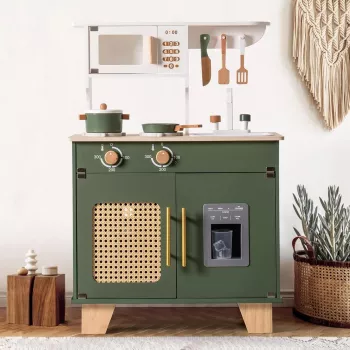
Wooden Play Kitchen Set with Accessories – Pretend Kitchen for Kids 3+
Quick Product Snapshot
| Item | Details |
|---|---|
| Product | Wooden Play Kitchen Set with Accessories – Pretend Kitchen for Kids 3+ |
| Price | 127.01 USD |
| Availability | In stock |
| Best for | Pretend play, role-play routines, cooperative play |
| Link | candoral.com product page |
More In-Stock Picks for Busy Households
- Deluxe Cat Climbing Tree & Claw Sharpener
- Luxury Plush Pet Cradle Bed: Deluxe Fleece & Velvet Sofa for Dogs & Cats
Gift and Activity Ideas to Get More Play Value
FAQ
What age is a wooden play kitchen best for?
Most wooden play kitchens are a great fit for ages 3+ because kids can safely handle pretend utensils and follow simple play routines. If younger siblings are around, supervise closely and keep small accessories out of reach.
How many kids can play with a pretend kitchen at once?
One child can play independently, but two or more can play well together when there are enough accessories to share. Assigning roles like chef, server, and customer helps reduce conflicts and keeps play moving.
How can accessories be stored so pieces don’t get lost?
Use a small bin or basket near the kitchen, and build a simple “closing time” routine where everything goes back on shelves, hooks, or into the bin. Labels (pictures for younger kids) make it easier for children to reset the space on their own.













Leave a comment