Is Your Pet Sweater Too Tight? Fit Checks for Neck, Chest & Legs
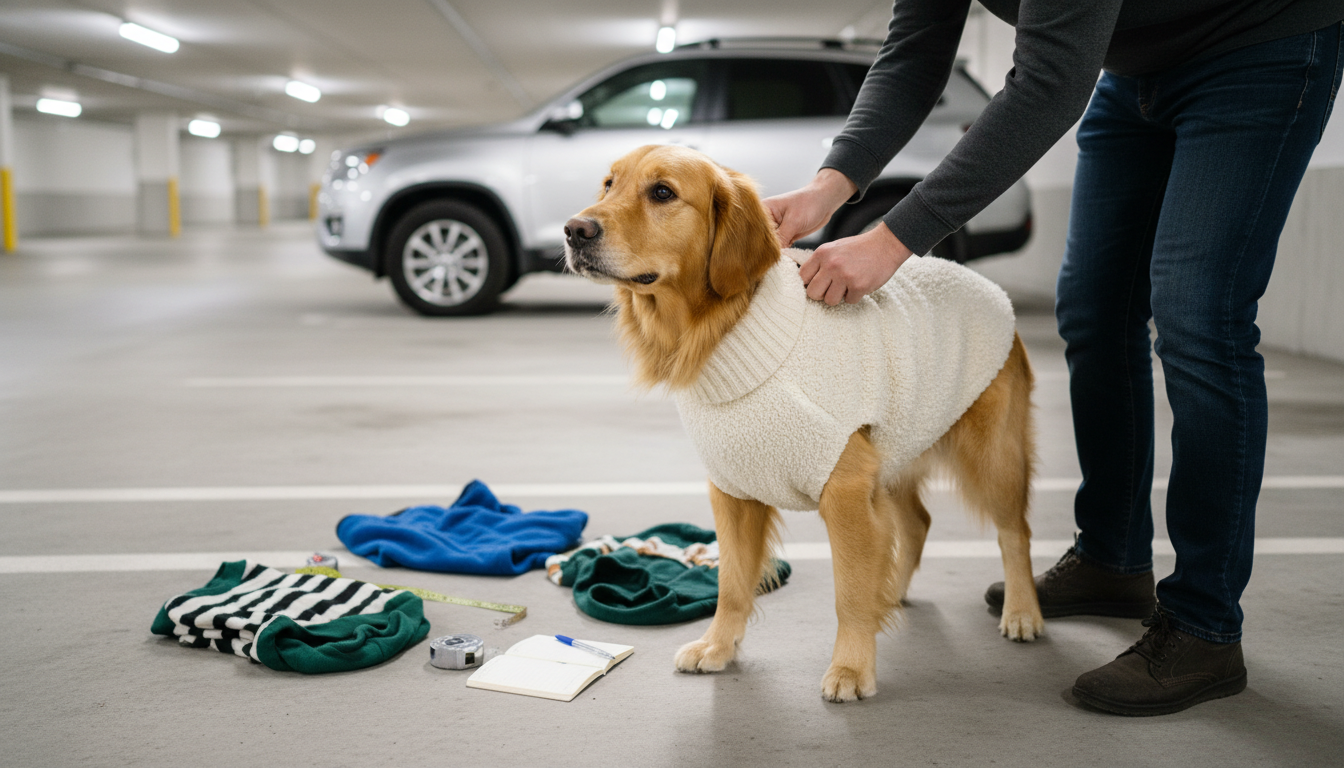
How can I tell if a pet sweater is too tight around the neck, chest, or legs?
A well-fitting pet sweater should feel snug but never restrictive. The fastest way to check is to watch how your pet moves, breathes, and behaves while wearing it. Tightness often shows up as rubbing, pinched fabric, or a sudden change in posture or activity level.
Neck: signs it’s too tight
The neckline should sit comfortably without pressing into the throat. If your pet coughs, gags, pants more than usual, or keeps scratching at the collar area, the neck may be too tight. Look for indentations in the fur or skin after you remove the sweater, or a neckline that rides up toward the jaw. A quick check: you should be able to slide two fingers between the sweater and your pet’s neck without forcing it.
Chest and ribs: pressure points to look for
The chest area needs enough room for full breaths and natural shoulder movement. If the sweater pulls sharply across the front when your pet sits or lies down, or if seams dig in behind the front legs, it’s likely too tight. Watch for shortened stride, reluctance to play, or a “stiff” walk. After a few minutes of wear, check for redness, flattened fur lines, or warm spots where fabric is pressing—common around the armpits and along the ribcage.
Leg openings and armholes: mobility matters
Leg openings should not pinch or rub. If the sweater causes chafing, leaves red marks, or makes your pet lift a leg awkwardly, the openings may be too small or positioned incorrectly. Another clue is twisting: if the sweater constantly rotates to one side, it may be tight in the chest or restrictive at the armholes.
Easy at-home fit test
Put the sweater on, then have your pet walk, sit, and stretch for 2–3 minutes. You’re looking for smooth motion, normal breathing, and no repeated pawing at the garment. If your pet seems uncomfortable, size up or switch to a style with a roomier chest or more flexible knit. For more fit tips and detailed checks, visit the main guide here.
FAQ
Should a pet sweater cover the belly completely?
No—many sweaters are designed with a shorter belly cut for comfort and easier bathroom breaks. The best coverage is whatever stays in place without rubbing the armpits or restricting movement.















Leave a comment