Birkenstock Women’s Slippers: Black Supportive Comfort
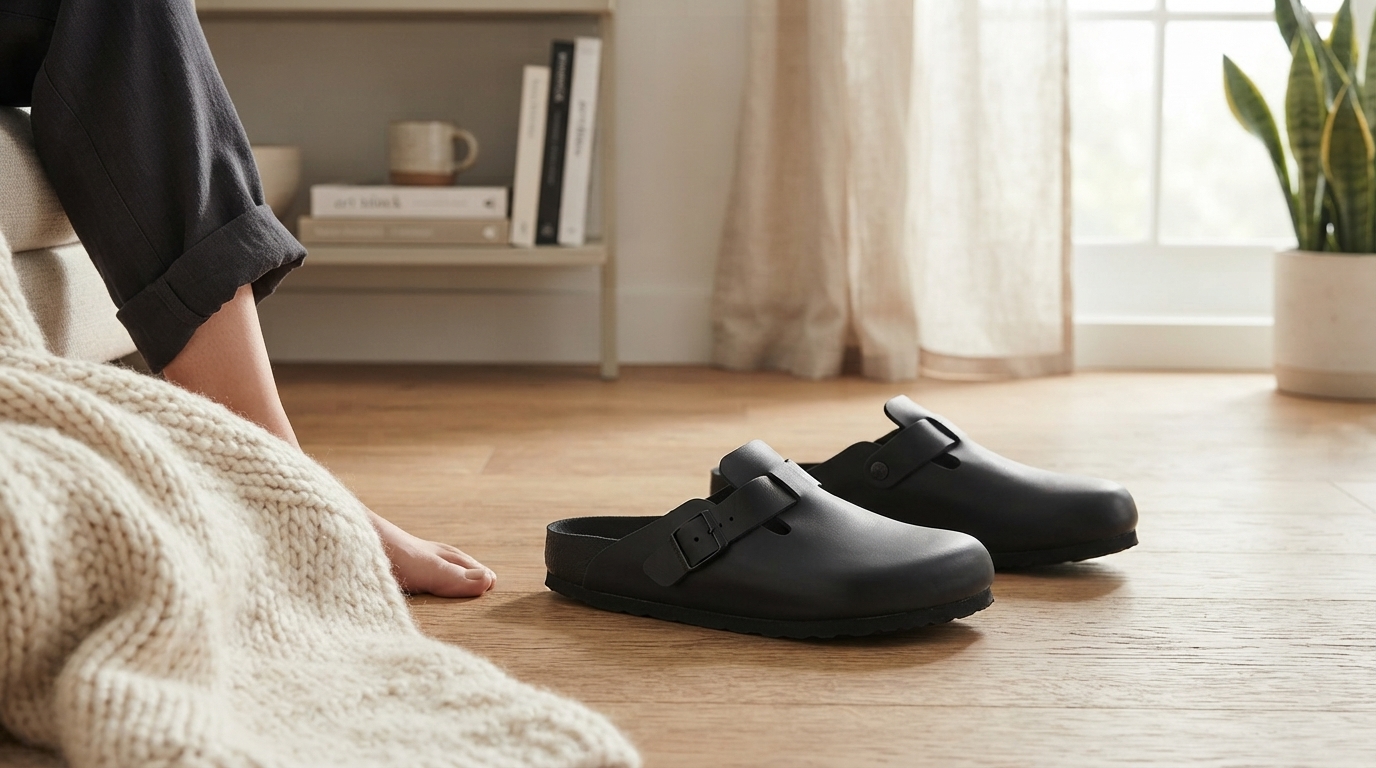
Birkenstock Women’s Black Slippers: Everyday Comfort With Signature Support
A good slipper should feel cozy while still supporting the foot during long mornings, busy evenings, and quick trips outside. If your current pair feels great for 10 minutes but leaves your arches tired (or your heels aching) by lunchtime, the difference usually comes down to structure. Below, you’ll find what to look for in women’s slippers with contoured support, how to dial in fit, and simple care steps that keep them comfortable season after season—plus a featured black option for a classic, wear-anywhere look.
What Sets Supportive Slippers Apart
Supportive slippers aren’t just “soft.” They’re built to help your feet stay aligned and stable while you move around the house. Instead of collapsing under pressure, they hold their shape and encourage a more natural stance.
- Contoured footbed: Follows the natural shape of the foot to help distribute pressure more evenly from heel to forefoot.
- Stable base: Reduces the “flat pancake” feeling common in soft-only slippers, especially on hard floors.
- Balanced materials: The best pairs combine softness with structure—particularly through the arch and heel cup.
- Secure upper: Helps keep the foot from sliding forward when walking, which can lead to toe gripping and fatigue.
For general foot-health guidance and comfort fundamentals, the American Podiatric Medical Association (APMA) is a reliable resource.
Featured Pick: Birkenstock Women’s Black Slippers
Black slippers tend to earn the “most-worn” spot in the closet: they pair easily with pajamas, joggers, leggings, and casual layers without looking overly bedroom-only. The Birkenstock Women’s Black Slippers lean into that versatility while focusing on the brand’s well-known footbed feel—an approach many people prefer when plush slippers start to feel unsupportive.
- Versatile black color: Easy to match with loungewear and casual outfits.
- Indoor comfort focus: Designed around a supportive footbed feel rather than a purely cushioned “sink-in” build.
- Practical for daily wear: Great for the house and quick errands depending on outsole traction and conditions.
- Pricing changes over time: Check the product page for current details.
Quick Details
| Item | Details |
|---|---|
| Product | Birkenstock Women’s Black Slippers |
| Price | 57.01 USD |
| Availability | In stock |
| Product page | View details |
If you want deeper background on how Birkenstock footbeds are designed and how to maintain them, review the brand’s official guidance at Birkenstock.
Fit and Sizing: Getting That “Just Right” Feel
Supportive slippers should feel secure and stable, not tight. A common mistake is buying too large for a “comfy” feel—then the foot slides, toes clench, and the upper stretches out faster.
- Toe room matters: Leave enough space so toes don’t press into the front when standing.
- Plan for socks: If you usually wear socks, test fit with your typical pair. Thicker socks may call for slightly more room.
- Expect a break-in: A supportive footbed can feel firmer at first; a short break-in period helps it adapt to your foot.
- Watch for heel slip: Frequent slipping often means the size is too large or the upper is too loose.
Fit Check in 60 Seconds
| What to check | Good sign | If not |
|---|---|---|
| Toe space | Small gap ahead of the longest toe | Size up or choose a roomier shape |
| Heel placement | Heel sits centered without sliding | Size down or adjust upper (if adjustable) |
| Arch feel | Supportive contact without sharp pressure | Try another size/width or a different footbed shape |
| Walking test | Foot feels stable, not “squishy” or wobbly | Look for a sturdier sole and more secure upper |
Comfort Features to Prioritize for Daily Wear
For slippers you’ll actually keep by the door (and not just by the bed), prioritize features that hold up through movement, temperature changes, and different surfaces in the home.
- Footbed structure: Contoured support can be especially helpful if you do a lot of standing while cooking, cleaning, or working at home.
- Upper feel: Look for a soft touch with enough hold to prevent sliding—especially important if you move quickly on stairs.
- Outsole grip: Helps on hardwood, tile, and area rugs, and can make quick steps outside feel more secure.
- Breathability: Materials and design should reduce overheating during longer wear.
- Weight and flexibility: A balanced slipper feels easy on the foot without turning flimsy or unstable.
Care Tips to Keep Slippers Looking and Feeling Fresh
Simple Care Guide
| Situation | What to do | What to avoid |
|---|---|---|
| Light dirt | Brush or wipe with a damp cloth | Soaking the entire slipper |
| Odor | Air out; use a mild deodorizing method as appropriate | Spraying harsh chemicals directly on footbeds |
| Wet slippers | Dry at room temperature with airflow | Dryer or direct high heat |
| Storage | Keep in a cool, dry place | Leaving in humid bathrooms long-term |
When to Replace a Favorite Pair
More In-Stock Finds (Shop Links)
- Weatherproof Heated Motorcycle Jacket
- Deluxe Cat Climbing Tree & Claw Sharpener
- Luxury Plush Pet Cradle Bed: Deluxe Fleece & Velvet Sofa for Dogs & Cats
FAQ
Are Birkenstock women’s slippers good for arch support?
They can be, thanks to a contoured footbed designed to follow the arch and heel shape rather than compress flat. This type of structure often feels firmer than plush slippers at first, but many people find it more comfortable during longer wear because it stays supportive.
How should slippers fit if wearing socks most of the time?
Try them on with the socks you actually wear day to day, then confirm you still have toe room and a secure heel. If you prefer thicker socks, you may need a bit more space, but the upper should still hold your foot without heel slippage.
Can these slippers be worn outside?
For quick errands, they may work if the outsole has adequate traction and the conditions are dry. For wet weather or rough surfaces, a dedicated outdoor shoe (or a separate “outside pair”) helps preserve the footbed and keeps indoor slippers cleaner longer.












Leave a comment