Wooden Play Kitchen Table: Multifunction Pretend Cooking
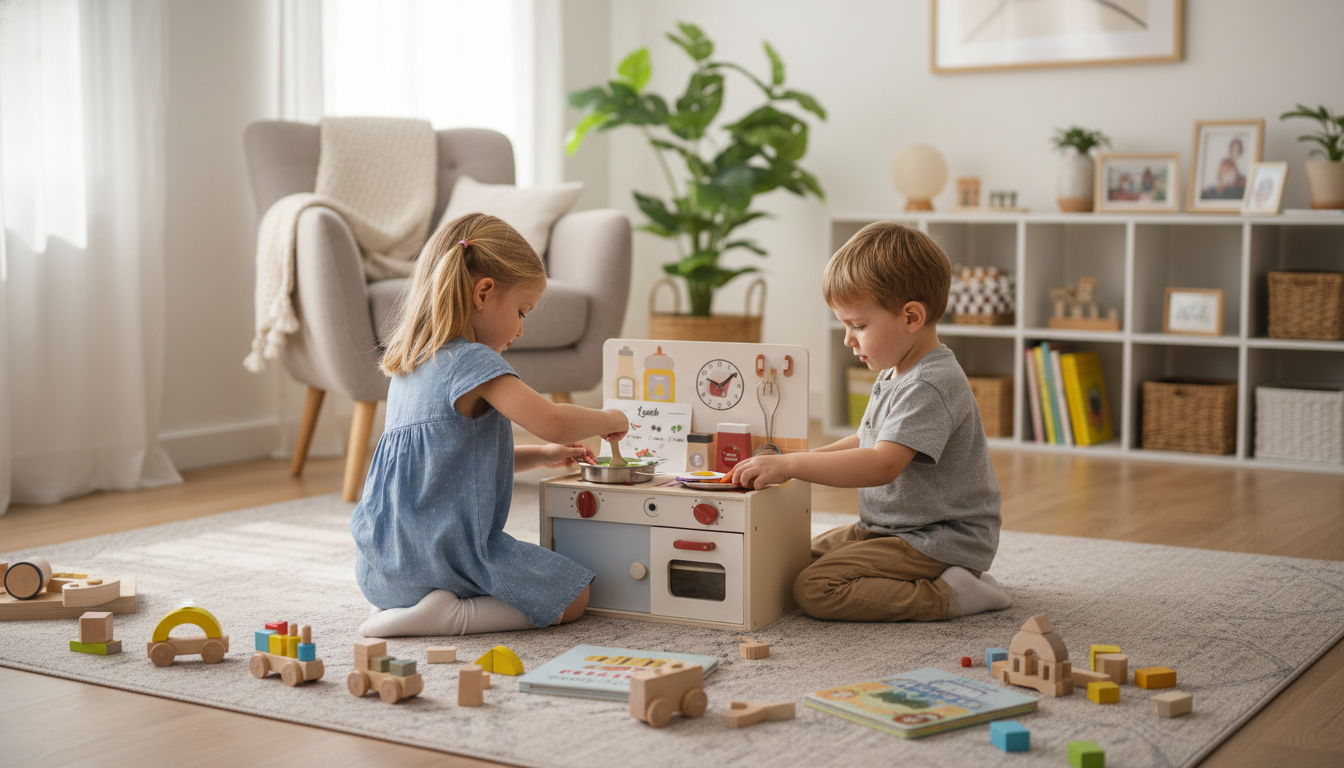
Kids’ Wooden Play Kitchen Table – Multifunction Pretend Cooking Set
A wooden play kitchen table turns everyday pretend play into hands-on learning—mixing role-play, fine-motor practice, and social skills in a setup that feels like a real workspace. Unlike bulky corner kitchens, a table-style set creates an open, shared “station” where kids can prep, cook, serve, and tidy from any side. That flexibility makes it a smart fit for bedrooms, playrooms, and even early-learning classrooms.
What Makes a Wooden Play Kitchen Table Special
A play kitchen table blends a familiar tabletop surface with kitchen-style features, so kids can switch between “cooking” and other activities without needing a full play kitchen wall. The best part is how naturally it supports open-ended play: one minute it’s a home kitchen, the next it’s a café, grocery counter, or a catering prep station.
- Combines a tabletop work surface with kitchen-style play features for flexible setups in bedrooms, playrooms, or classrooms
- Encourages open-ended play: cooking, serving, “shopping,” cleaning, and hosting
- Wood construction typically offers a sturdier, more furniture-like feel than lightweight plastic sets
- A table format supports multiple kids playing at once from different sides, reducing crowding
Skills Kids Practice During Pretend Cooking Play
Pretend cooking is more than cute role-play. It’s a natural way for kids to practice real-life routines and early learning skills—especially when the set includes interactive parts like knobs, doors, and storage spots for accessories.
- Fine-motor skills: turning knobs, placing food pieces, using play utensils, and organizing accessories
- Language development: naming foods, describing steps, taking “orders,” and storytelling
- Social-emotional skills: sharing roles (chef, server, customer), turn-taking, and cooperative problem-solving
- Early math concepts: sorting foods, counting pieces, comparing sizes, and basic sequencing (first/next/last)
- Independence routines: mimicking handwashing, tidying the play area, and “clean-up time” habits
Small additions can deepen the learning: a notepad for “orders,” a simple picture menu, or labeled bins for “produce,” “bakery,” and “dairy.”
Key Features to Look For in a Multifunction Set
Since a play kitchen table is likely to become a daily favorite, focus on build quality and usability. A stable base, smooth edges, and durable moving parts matter more than having the most accessories in the box.
- Stable base and balanced design so the table stays steady during energetic play
- Smooth, rounded edges and securely attached parts to reduce snagging and pinches
- Interactive elements that last: knobs that turn smoothly, doors that open/close without scraping, and durable fixtures
- Storage options (shelves, bins, hooks) to keep accessories contained and reduce clutter
- A surface height that matches the child’s age so play feels comfortable without hunching
- Accessory compatibility: works with common wooden play foods and utensils kids may already own
Quick Feature Checklist
| Feature | Why it matters | What to check |
|---|---|---|
| Stability | Prevents tipping and wobble during group play | Wide legs/base, even contact with the floor, solid fasteners |
| Smooth finish | Helps avoid splinters and rough spots | Sanded edges, consistent paint/varnish, no sharp corners |
| Storage | Makes clean-up easier and teaches organization | Shelves/bins/hooks that are easy for kids to reach |
| Interactive parts | Keeps play engaging over time | Knobs turn, doors align, parts feel securely mounted |
| Easy cleaning | Supports daily use without stress | Wipeable surfaces, fewer hard-to-reach crevices |
Safety and Materials: What to Prioritize
Play kitchens are generally safe when used as intended, but a few checks go a long way—especially if the set includes small food pieces or movable parts.
- Age grading: choose sets appropriate for the child’s age, especially if small accessories are included
- Choking hazards: keep small pieces away from toddlers who still mouth objects; store accessories securely
- Finish and paint: prioritize non-toxic finishes and well-cured coatings; avoid strong chemical odors
- Pinch points: check doors, hinges, and moving parts for finger-safe gaps
- Regular inspections: tighten screws periodically and remove any loose or damaged parts
For general toy safety guidance, the U.S. Consumer Product Safety Commission offers practical, up-to-date tips at CPSC: Toy Safety. For choking prevention reminders (especially helpful when younger siblings are around), see HealthyChildren.org (AAP): Choking Prevention.
Age-by-Age Play Ideas (From Simple to Imaginative)
A multifunction table grows with your child. Start with simple routines, then layer on storytelling, pretend “rules,” and cooperative roles as attention span and social skills develop.
Setup, Care, and Keeping It Looking New
A Practical Pick for Everyday Pretend Play
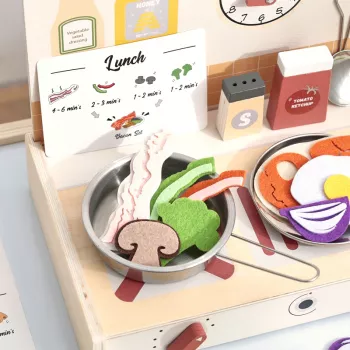
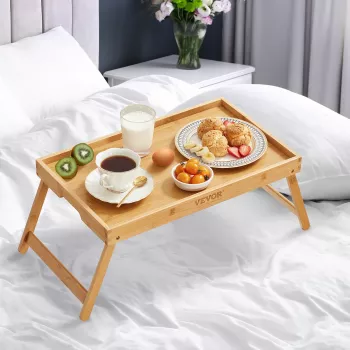
If you’re ready to set up a sturdy pretend-cooking station, start with Kids’ Wooden Play Kitchen Table – Multifunction Pretend Cooking Set. For extra playroom organization, a compact drawer unit like Modern Nightstand with Storage – 2 Fabric Drawers, Wood Top, Steel Frame can help corral utensils and play food. And for “serving” games that extend beyond the kitchen station, Bamboo Breakfast Tray with Folding Legs for Sofa Bed, Adjustable Serving Laptop Desk can double as a pretend room-service tray for story-based play.
FAQ
What age is a wooden play kitchen table best for?
Most wooden play kitchen tables work best for preschoolers through early elementary kids (roughly ages 3–7), but the right fit depends on the manufacturer’s age grade and the size of the accessories. If small pieces are included, close supervision is important for younger toddlers.
How can a play kitchen help with learning?
Pretend cooking builds language, early math, and motor skills through everyday play—like taking “orders,” naming ingredients, counting food pieces, and following simple steps (mix, cook, serve). It also encourages cooperative play when kids share roles like chef and customer.
How should a wooden play kitchen be cleaned and maintained?
Wipe it with a soft damp cloth and mild soap, then dry promptly to protect the wood. Avoid harsh chemicals, and periodically check and tighten screws while removing any loose or damaged parts.














Leave a comment